
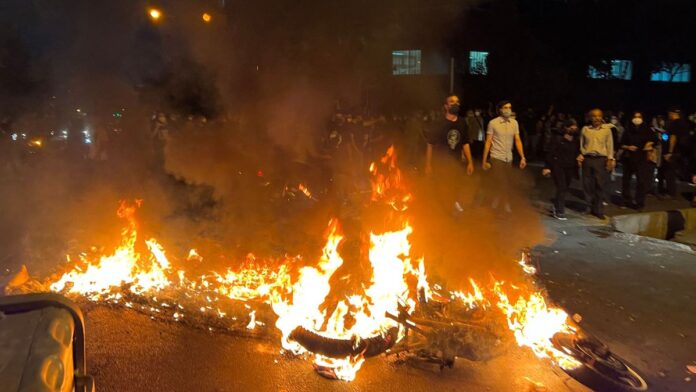
Experts are cautioning that Britain and Western nations should distance themselves from Iran to allow for a potential uprising aiming to overthrow the longstanding Mullah regime that has wielded power since 1979. Iranian dissidents suggest that a growing rebel movement comprising around 20,000 covert cells could bring down the ruling Islamic Republic of Iran and its enforcement arm, the Revolutionary Guard Corps. These dissidents anticipate a revolution may unfold within months.
The rebel movement, with over 10 members in each clandestine cell, continues to expand, with estimates suggesting there could be up to 100,000 or more individuals involved. The cells operate independently, maintain secrecy, and are unaware of each other’s identities. The dissidents, including those aligned with the People’s Muhajideen Organisation of Iran (MEK), are increasingly visible in anti-regime street protests and may potentially arm themselves if necessary.
Dr. Majid Sadeghpour, an Iranian exile residing in the United States and the political director of the Organisation of Iranian American Communities in Washington, points out the regime’s escalating repression tactics amid political and military instability. The current Supreme Leader of Iran, Ayatollah Ali Khamenei, holds significant control over state affairs, the military, and the judiciary, succeeding Ayatollah Khomeini in 1989.
The dissident groups, such as the MEK, face severe repercussions if caught, including public executions and mass burials. Despite the risks, these groups are voicing dissent and demonstrating against the regime’s oppressive measures. Dr. Sadeghpour emphasizes the need for a change in global policies toward Iran, given its involvement in terrorism, nuclear programs, and human rights abuses.
While some argue against the popularity of the rebel groups within Iranian society, Dr. Sadeghpour asserts that grassroots support is vital for the survival of these covert units. The potential for an armed uprising is contemplated, as internal forces within Iran are believed to be ready for such action. Dr. Sadeghpour underscores the oppressive nature of the current regime, likening it to a fascist, medieval dictatorship with deep-rooted violent tendencies.
Discussions on negotiating with the Iranian regime are met with skepticism by Dr. Sadeghpour, who doubts the regime’s willingness to change its authoritarian policies. The ongoing internal dissent and potential for a mass uprising reflect a growing discontent with the current regime’s oppressive tactics and ideological rigidity.

