
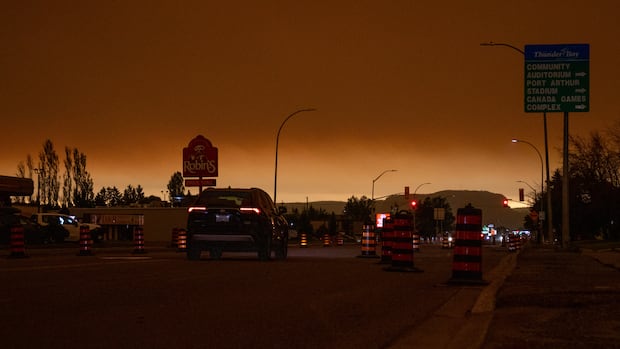
First Nation communities in northwestern Ontario have been severely affected by this summer’s wildfires, leading to evacuations and the complete destruction of Namaygoosisagagun First Nation (also known as Collins First Nation) and Whitewater Lake First Nation.
The Sioux Lookout First Nations Health Authority (SLFNA) has highlighted the impact on individuals traveling to Thunder Bay for medical appointments, as hotels in the area are quickly filling up. The demand for accommodations includes evacuees, emergency responders, and tourists visiting the city.
Monica Hemeon, vice-president of regional services for SLFNHA, emphasized the longstanding challenges faced by First Nations communities in accessing healthcare services outside of their areas, citing issues with transportation and accommodation. She mentioned instances where medical transportation was not arranged in a timely manner, resulting in missed appointments ranging from 60 to 150 per month in some communities.
Hemeon pointed out that the influx of tourists in Thunder Bay, such as attendees of the recent Canadian Lakehead Exhibition, has exacerbated the shortage of hotel rooms, making it difficult for SLFNHA members to secure accommodations. She stressed the importance of not missing appointments, especially for remote communities that rely on fly-in services and need adequate time for planning and travel care.
In response to the accommodation challenges posed by the wildfires, the Indigenous Services Canada (ISC) advised non-urgent medical appointment holders to consider rescheduling, acknowledging that the situation might take a few more weeks to resolve.
Hemeon expressed concerns about the impact of these circumstances on the health outcomes of individuals in the north, noting that delays in care and difficulties in accessing specialists could have serious consequences, potentially leading to loss of life. She emphasized the need for better planning and support to ensure that people receive timely and essential healthcare services.

