
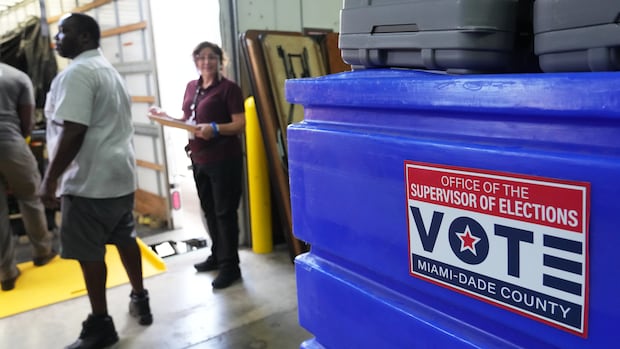
The recent preliminary approval by the U.S. Supreme Court of President Donald Trump’s mail-in voting restrictions has cast doubt on the voting method used by almost one-third of the nation. While the decision may not result in immediate changes for the upcoming midterms in November, it has raised concerns about the potential impact on the electoral process.
In an unsigned order on Monday, the majority of the high court indicated that they have not yet determined the constitutionality of Trump’s executive order. They stated that the states challenging the order did not have the legal standing to contest it. However, Justice Ketanji Brown Jackson voiced dissent, cautioning that the ruling could introduce confusion and uncertainty into the midterm elections.
Trump’s executive order, issued in March, directs the administration to compile lists of eligible voters and instructs the U.S. Postal Service to send mail-in ballots only to individuals on those lists. Despite an existing injunction preventing the postal service from implementing these changes, the administration has sought to lift the injunction and introduced new regulations that would come into effect pending legal clearance. These regulations mandate specific envelope formatting for mail ballots and require states to use an electronic system to identify voters using mail-in ballots, threatening non-compliant states with non-delivery of ballots.
Local officials manage U.S. elections across numerous decentralized offices, many of which lack full-time staff. Tammy Patrick, Chief Program Officer at the Elections Center, expressed skepticism about states’ ability to comply with the new rules, noting that no state currently operates in the manner prescribed by the executive order. The dismantling of the Federal Election Assistance Commission earlier this year removed a critical resource for election officials, particularly in managing mail-in voter registration.
Despite looming deadlines for ballot distribution, officials like Jesse Salinas from Yolo County, California, are skeptical about the feasibility of last-minute procedural changes. Previous attempts by the Trump administration to impose voting restrictions have faced legal hurdles, including a recent Supreme Court ruling allowing the counting of ballots received after election day. The administration’s efforts to access voter roll data from states have also faced legal challenges, with election officials citing privacy concerns.
President Trump, who has criticized mail-in voting as susceptible to fraud, has seen a partisan divide in mail voting preference emerge during his tenure. While instances of voter fraud exist on an individual scale, there is no substantial evidence supporting widespread fraud allegations made by Trump regarding past elections. These claims have further fueled partisan divisions over mail-in voting practices.
Overall, the ongoing legal battles and challenges surrounding mail-in voting regulations underscore the contentious nature of election administration in the United States.

