
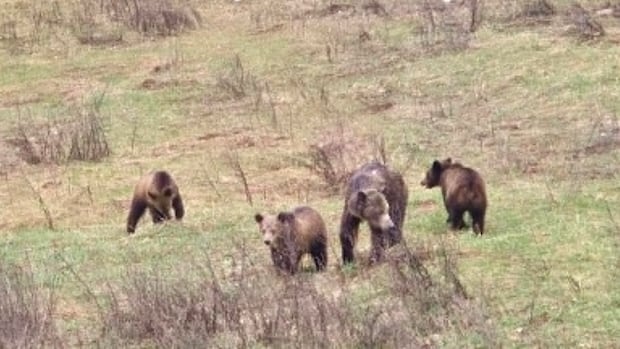
In a recent update, the B.C. Conservation Officer Service announced that on Aug. 14, they euthanized the mother grizzly due to concerns over its habituated behavior and lack of fear towards humans. The two remaining yearlings were safely relocated to an undisclosed area for continued monitoring. The service declined to provide any interviews when approached by CBC News.
In response to the decision to kill a young grizzly bear, a rally was organized in Nelson, B.C. The bear was part of a local grizzly family that has been a familiar sight in the area, generating widespread attention. Katie Graves, from the Ursa Project Society, described the emotional atmosphere at the rally, highlighting the community’s deep connection to the bears.
Graves emphasized that the young grizzly, which had a leg injury or deformity, was capable of mobility and feeding and should not have been euthanized. She mentioned that many bears adapt and thrive even with physical limitations, such as running on three legs.
According to the B.C. Conservation Officer Service, the decision to euthanize the bear was based on factors including its age, injury, and past conflicts, which made rehabilitation or relocation unfeasible. The service acknowledged the difficult nature of such decisions and emphasized the importance of public safety.
The incident has sparked significant discussion on social media platforms, with many expressing criticism of the bear’s killing. However, there is also recognition of the challenges faced by conservation officers in balancing public safety and wildlife protection. Suggestions have been made for better waste management practices to mitigate human-bear conflicts in the future.
Wildlife biologist Clayton Lamb emphasized the need for stronger policies to reduce attractants that draw bears into urban areas. He highlighted the importance of proactive measures to prevent conflicts before they escalate, as habituated bears pose a significant challenge to rehabilitation and relocation efforts.
The City of Nelson has pledged to implement measures to prevent conflicts with wildlife, including installing bear-resistant garbage cans and conducting public education programs. By enforcing regulations on waste management and wildlife attractants, the city aims to create a safer environment for both residents and wildlife.

