
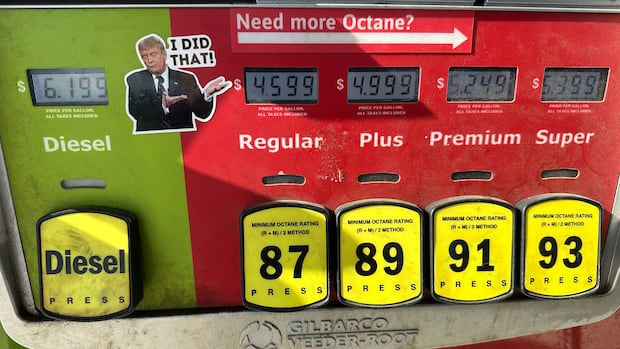
President Trump has been working hard to downplay concerns over increasing prices for almost a year now. He has dismissed worries about affordability as a ploy by Democrats and erroneously claimed that consumer prices had decreased under his administration when they had actually gone up. Additionally, he repeatedly assured the public that gas and diesel prices, which surged following the conflict with Iran, would soon drop. Despite his efforts, polls indicate that voters are not convinced by Trump’s rhetoric on the cost of living.
Recent polling data from the Silver Bulletin, which aggregates public opinion surveys, reveals that over 70% of Americans disapprove of Trump’s handling of inflation. This disapproval could pose a challenge for Trump and his Republican Party as they aim to retain control of the U.S. Congress in the upcoming midterm elections on Nov. 3.
The U.S. Department of Labor reported a 3.7% increase in the consumer price index in September compared to the previous year, primarily driven by higher fuel and clothing prices. This latest inflation data could further compound challenges for Trump as voters prioritize economic issues leading up to the midterms.
Spencer Kimball, the executive director of Emerson College Polling Center in Boston, highlighted that the economy, particularly the cost of living, is a major concern for voters nationwide. Kimball emphasized that everyday expenses are mounting, causing worries about affordability among the electorate. He expressed skepticism that there will be swift solutions to address rising gas prices and other living costs before the elections.
Trump’s recent campaign travels across states like Alaska, Kansas, Ohio, and Texas, which he won decisively in the 2024 presidential race, underscore his efforts to bolster Republican Senate candidates. However, Tim Malloy, a polling analyst at Quinnipiac University, described Trump’s campaign efforts as a last-ditch attempt to support at-risk Republican candidates facing electoral challenges due to rising living costs.
Malloy noted that gas prices are a primary concern for voters, with many attributing the situation to Trump’s policies. He suggested that Trump’s unfulfilled promises and the ongoing economic challenges have left voters dissatisfied, potentially impacting the midterms.
In communities like Martinsburg, West Virginia, individuals shared their struggles with the economic strain caused by escalating prices. Residents, like Christalyn Levy, expressed difficulties in affording basic necessities due to the financial burden. Similarly, Juliana Kaiser mentioned adjusting her lifestyle by baking bread and minimizing travel to cope with the escalating costs. These personal experiences reflect the broader concerns about affordability that are likely to influence voter decisions in the upcoming elections.

