
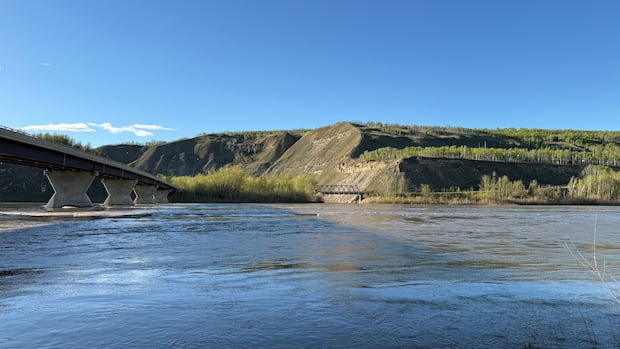
Leaders in the northeastern region of British Columbia are advocating for the establishment of a new fund to compensate local communities should the province proceed with a proposed fourth hydroelectric dam on the Peace River. B.C. Hydro recently presented a public briefing to the Peace River Regional District regarding Site E, situated near the Alberta border north of Dawson Creek. If the project receives approval, board chair Brad Sperling foresees significant alterations to the river system in the province, resulting in the flooding of residences, agricultural land, public parks, bridges, and impacting local water sources. Sperling expressed concerns, stating, “There is no longer a Peace River; it’s going to be reservoirs from here to Finlay Bay.”
B.C. Hydro asserts the necessity for new sources of firm power to meet a projected 50% rise in power demand by 2050, primarily driven by industrial expansion. Despite this, Sperling highlights the enduring consequences of decades of energy development, including the existing three dams on the Peace River and the ongoing construction of large-scale wind farms.
Sperling advocates for a compensation mechanism akin to the Columbia Basin Trust, established in 1995 to support communities affected by dams on the Columbia River. Presently, the trust boasts assets exceeding $1.2 billion. “This is being done on the backs of the northeast,” Sperling emphasized. “The power generated in this area necessitates a fair economic return.”
Addressing legislative barriers, Site E is presently restricted from construction under the Clean Energy Act, alongside another hydro proposal on the Homathko River. B.C. Hydro anticipates governmental modifications to permit geotechnical and environmental surveys at both sites. Julia Balabanowicz, B.C. Hydro’s government relations director, clarified that while construction remains prohibited, exploratory studies will be facilitated. She added that potential legislative adjustments in the future could enable further progress on the projects.
Balabanowicz noted that the two hydro initiatives are among several options under consideration to meet future energy demands, including utility-scale battery projects. B.C. Hydro plans to allocate up to $12 million for initial studies on both proposals.
Local officials echoed the call for prolonged compensation, with Pouce Coupe Mayor Danielle Veach underscoring the strain of new energy ventures on the region, leading to significant agricultural challenges and infrastructure management issues. Dawson Creek Mayor Darcy Dober raised concerns about the financial burden of securing a new water supply from the Peace River section slated for submersion, highlighting potential costs in the hundreds of millions. Other directors proposed exploring alternative energy solutions such as nuclear and natural gas to meet growing energy requirements.
In conclusion, stakeholders are urging for careful consideration of the environmental and social impacts of the proposed hydro projects, emphasizing the need for comprehensive compensation mechanisms and exploring diverse energy options to ensure sustainable development in the region.

