
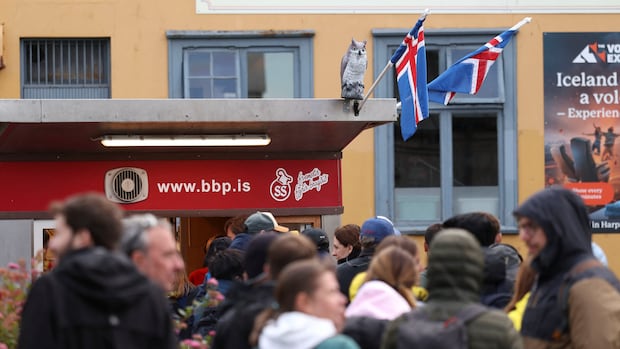
Icelandic citizens have decided to remain outside the European Union, according to the referendum outcome released on Sunday. The majority rejected the government’s proposal to resume talks for EU membership, emphasizing the significance of Iceland’s fishing grounds.
The debate over joining the EU has persisted for more than ten years in the Arctic nation of 400,000 people. Initially, there were expectations of a close vote in favor of initiating membership negotiations. However, recent opinion polls indicated a shift in sentiment.
During the referendum held on Saturday, 52.8% of the votes opposed the government’s plan for discussions with Brussels, while 47.2% were in favor. An impressive 82.5% of eligible voters participated in the process. Only the central Reykjavik districts showed a majority in favor, with rural areas and suburbs of Reykjavik voting against.
The government portrayed EU membership as a safeguard against trade disputes and Arctic geopolitical tensions, presenting the referendum as a crucial moment. Prime Minister Kristrun Frostadottir stated that a “no” vote would halt the EU debate for the duration of her center-left coalition’s tenure.
In Brussels, there was optimism that Iceland’s potential accession could enhance EU enlargement credibility and bolster the bloc’s strategic position in Arctic security matters. Despite being a NATO member without its own military, Iceland deliberated on whether EU membership could enhance its security amid uncertainties raised by U.S. President Donald Trump.
Fishing stood out as a primary concern for many Icelanders, outweighing security considerations. The fishing industry is a significant contributor to Iceland’s economy, accounting for 15% of GDP and around 40% of export earnings.
Financial concerns also played a pivotal role in the referendum discussions. Iceland first applied for EU membership in 2009 following a financial crisis but terminated negotiations in 2013. Economic issues such as high inflation and interest rates were central topics ahead of the referendum.
Proponents of EU membership argued that adopting the euro could provide economic relief, considering Iceland’s central bank interest rate of eight percent compared to 2.25 percent at the European Central Bank. However, opposition leader Gudrun Hafsteinsdottir contended that the economic benefits were overstated and should be addressed by Icelandic policymakers.
Some voters, like 70-year-old Ragnhildur Skarphedinsdottir, believed Iceland was self-sufficient and prosperous on its own, choosing to vote “no” in the referendum. Under EU regulations, fishing quotas are determined based on historical patterns, but some Icelanders remain skeptical about retaining control over their fishing waters if they were to join the EU.

