
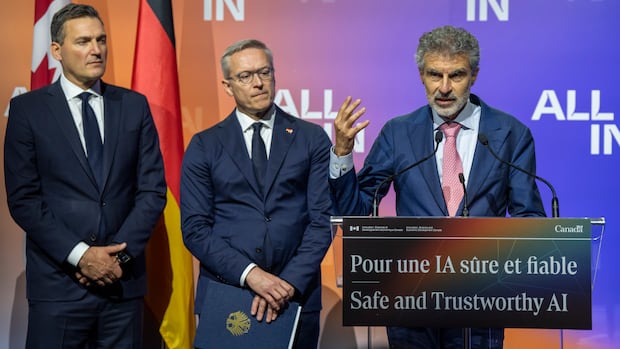
Artificial intelligence, if left unmanaged, poses a serious threat to humanity — this alarming message has been echoed by one of the field’s pioneers, Yoshua Bengio, for many years.
On Wednesday, alongside officials from the Canadian and German governments, they jointly revealed an investment exceeding a quarter billion dollars to support the Canadian AI researcher’s efforts to combat this danger.
Bengio is in the process of developing a new AI model. Named Scientist AI, this model aims to be inherently safe: it will prioritize objective truths and comprehend facts without having its own objectives — such as satisfying its human operators. Additionally, it could serve as a safety mechanism for other AI systems.
The Canadian federal government is contributing $150 million to LawZero, a non-profit organization based in Montreal that Bengio established last year to create models like Scientist AI. This marks the first instance of federal funding being allocated to the organization. Germany is providing an additional investment of 100 million euros.
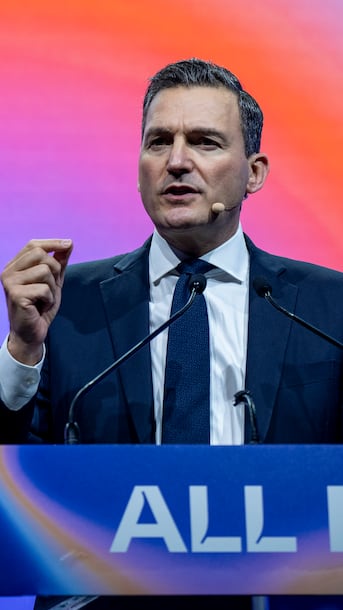
Canada and Germany will jointly invest up to $300 million Cdn into LawZero, a non-profit organization founded by Canadian computer scientist Yoshua Bengio, aimed at developing a new form of safe AI as part of Canada’s efforts toward establishing its own ‘sovereign AI capability,’ according to Artificial Intelligence Minister Evan Solomon.
“I approach this with a sense of urgency, as I want my children and grandchildren to have a future,” Bengio stated at the All In conference, a significant event for AI leaders held in Montreal this week.
Fears regarding the risks associated with AI have intensified, particularly after an outgoing researcher from Anthropic — a company recognized as a leader in AI technology — cautioned that AI could potentially extinct humanity within the next ten years.
In a recent interview with Bloomberg, Prime Minister Mark Carney also advocated for the creation of a global, non-industry organization to oversee and address the risks associated with technology.
-
Read more about LawZero: Can AI safeguard us against AI? One of its Canadian pioneers thinks so
-
Exclusive
Draft federal AI strategy aims to scale up adoption, offer literacy training by 2031
-
OpenAI flags 6 new examples of ‘concerning’ AI behaviour
According to Artificial Intelligence Minister Evan Solomon, the funding for LawZero is part of a broader initiative in Canada to promote responsible AI development.
“We are gathered here not in response to yesterday’s headlines, but because of the philosophical stance we have adopted, which is to develop responsibly and safely,” he explained.
Safer by design?
Experts assert that in many respects, the situation has progressed beyond repair: controlling issues such as AI hallucinations and misinformation spread, or acting without explicit human consent, will be extremely difficult.
“Currently, there’s no simple solution to this challenge. We have immensely powerful, even transformative, AI systems,” stated Jaxson Khan, an AI policy and adoption expert at the Munk School of Global Affairs, University of Toronto.
He noted that American and Chinese companies are developing extraordinarily powerful AI systems, a trend that is expected to persist.
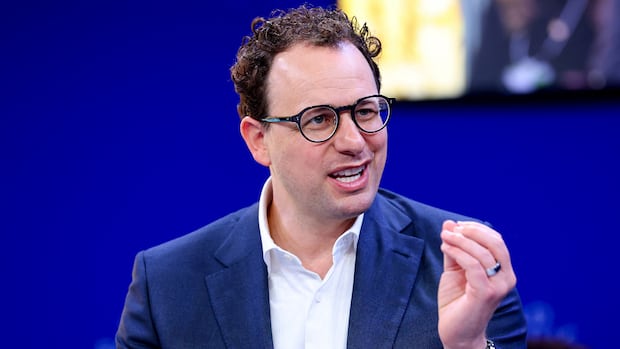
Anthropic CEO Dario Amodei warned that AI development needs to slow down for safety measures to catch up. U.S. President Donald Trump dismissed the risk of artificial intelligence when questioned by reporters.
“Canada is currently at a juncture where it feels like, in terms of AI, we lack substantial control,” he remarked.
However, partnering with Germany to fund LawZero remains significant, according to Khan.
“It’s essential to create alternatives that are ideally safer from the outset,” he pointed out.
“I am interested to see if this initiative will succeed, but I do believe it represents a valuable investment by the government and a beneficial collaboration with Germany.”
Domestic capacity and partnerships
Experts highlight the necessity of collaborating with nations that share similar objectives and principles.
This announcement followed closely after a merger agreement was reached between two AI companies, Canada’s Cohere and Germany’s Aleph Alpha.
“This can be seen as a form of capacity building,” remarked Vass Bednar, managing director of the Canadian Shield Institute think tank, regarding the merger.
-
AI ‘fearmongering’ could harm Canada’s rare opportunity, says top CEO
-
Analysis
One of the world’s biggest AI companies wants a deal with Canada. Is sovereignty the trade-off?
“We possess the capability to catch up and create alternatives. We must also hold on to that belief,” she emphasized.
“We cannot allow ourselves to fall prey to the perceived inevitability of the technology or the harms it brings.”
According to Khan, adopting a multifaceted strategy could yield positive results.
Bengio believes surrendering is not an option.
“Achieving our objectives won’t be simple,” he acknowledged. “However, if we can shift the world even slightly towards a better future for humanity, we must make the effort.”

