
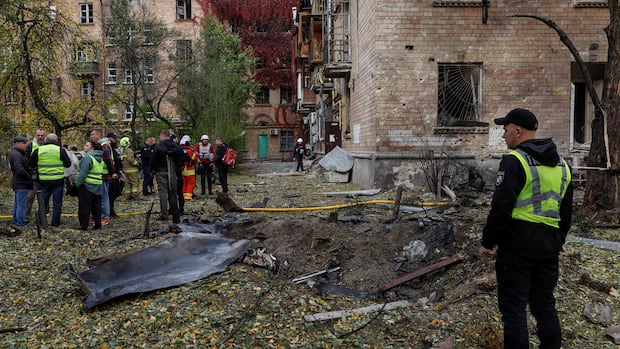
Ukraine has renewed its offensives against Russian refineries, targeting a facility in the Ryazan region, as reported by the regional governor on Thursday. This development follows Ukrainian President Volodymyr Zelenskyy’s expressed frustration over the withdrawal of U.S. intelligence support.
After U.S. President Donald Trump unexpectedly announced an energy ceasefire between Russia and Ukraine on Sunday, Zelenskyy indicated that Kyiv had held off on attacking Russian refineries, which Trump had accused of contributing to rising diesel prices worldwide.
However, Zelenskyy voiced growing dissatisfaction regarding Russia’s ongoing assaults on Ukrainian energy infrastructure, which he stated had left 600,000 people without electricity on Wednesday. He cautioned that Ukraine would not indefinitely halt its own strikes if Russia did not reciprocate and criticized what he perceived as Trump’s favoritism towards Russia.
In an interview with the Financial Times published on Thursday, he remarked that Ukraine’s tolerance had reached its limit. “The block [on attacking refineries] is lifted. We’re finished,” he said.
-
Starlink restrictions would hamper Ukraine’s war effort. But the country can adapt, experts say
-
12 U.S. senators, including 6 Republicans, tell Trump to drop diesel deal with Russia
Governor Pavel Malkov of Russia’s Ryazan region reported on Telegram that a significant Ukrainian drone assault on the area resulted in a fire at an oil refinery.
“The extent of the material damage is currently being evaluated. Emergency services are on-site,” he stated.
The Ryazan refinery, owned by Russian oil conglomerate Rosneft, supplies fuel to Moscow and has been the target of multiple drone strikes in recent months. The facility represents nearly five percent of Russia’s overall oil refining capacity.
President Vladimir Putin remarked on Thursday that the recent Ukrainian assaults on Russian oil refineries had not inflicted considerable damage and promised that Moscow would retaliate, according to Interfax.
“They strike here and there. Nothing of particular significance. Yet they continue their actions,” Putin commented.

U.S. President Donald Trump claims that a deal with Russia will allow for the release of 300,000 tonnes of Russian diesel to global markets this month to help reduce prices for Americans. Simon Shuster, a staff writer at The Atlantic and author of “The Showman,” discusses how this agreement is influencing the dynamics of the conflict.
No European alternative to Starlink
In his interview, Zelenskyy criticized the U.S. administration’s eagerness to negotiate business arrangements with Moscow and Trump’s seeming admiration for Russia’s Vladimir Putin.
On Saturday, Trump suggested that Ukraine should replace Zelenskyy and criticized Ukraine’s assaults on Russian oil facilities, just a day after announcing a diesel supply agreement with Russia aimed at lowering fuel prices that have surged since the beginning of the U.S.-Israeli conflict with Iran in February.
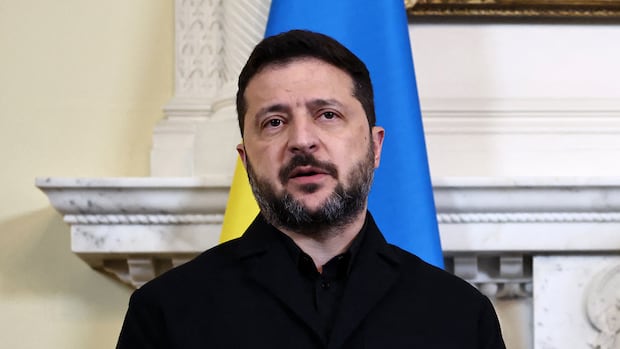
Ukrainian officials have indicated that restrictions on the military version of Starlink have hindered their defense capabilities against Russia and raised concerns about whether adjustments to Elon Musk’s SpaceX internet service were influenced by political motives.
Despite a three-day halt on refinery strikes, Ukrainian officials reported a lack of U.S. early-warning alerts for incoming Russian ballistic missile threats in recent days.
They also noted that the military version of Elon Musk’s Starlink satellite communications service had experienced slowdowns across the nation, affecting front-line operations and medium-range attacks on Russian military installations.
Musk mentioned on Wednesday via a post on X that Starshield—the military variant of Starlink—is owned and regulated by the U.S. government, which determines any limitations on speed.
-
Director Alex Gibney on terrifying Musk documentary: ‘It’s not a funeral; it’s a warning’
-
How high inflation is hurting Trump’s Republicans in U.S. midterm campaign
Zelenskyy has indicated that Ukrainian military leaders were informed by their U.S. counterparts that Washington would restrict intelligence sharing unless they ceased strikes on Russian energy infrastructure.
Zelenskyy mentioned in the FT interview that the halt was represented to Kyiv as a technical issue, but he dismissed this explanation, labeling it a matter of “will.”
Currently, Europe lacks an immediate alternative to Starlink that Ukrainian forces could use for their drones, although European governments and businesses are pursuing long-term solutions.
When asked if Ukraine would consider pausing energy strikes to mend relations with the White House, Zelenskyy stated that he would only agree if it resulted in receiving additional U.S.-made Patriot interceptors, which he termed the “minimum” requirement.
Trump’s relationship with Ukraine’s president has been contentious, dating back to 2019 when he was impeached by the Democrat-controlled U.S. House of Representatives for pressuring Zelenskyy for a political favor in exchange for military assistance. He was acquitted by the U.S. Senate.
Trump has also been vocal about his criticism regarding the level of military and humanitarian aid that Joe Biden’s administration has provided to Ukraine following Russia’s invasion in 2022.
3 killed in central Ukraine
According to Ukraine’s air force, 580 Russian drones attacked the nation overnight, with 536 of them being intercepted.
The central region of Kirovohrad experienced the most significant Russian assault on its territory during the conflict, resulting in three fatalities and six injuries overnight, as reported by the local governor on Thursday.
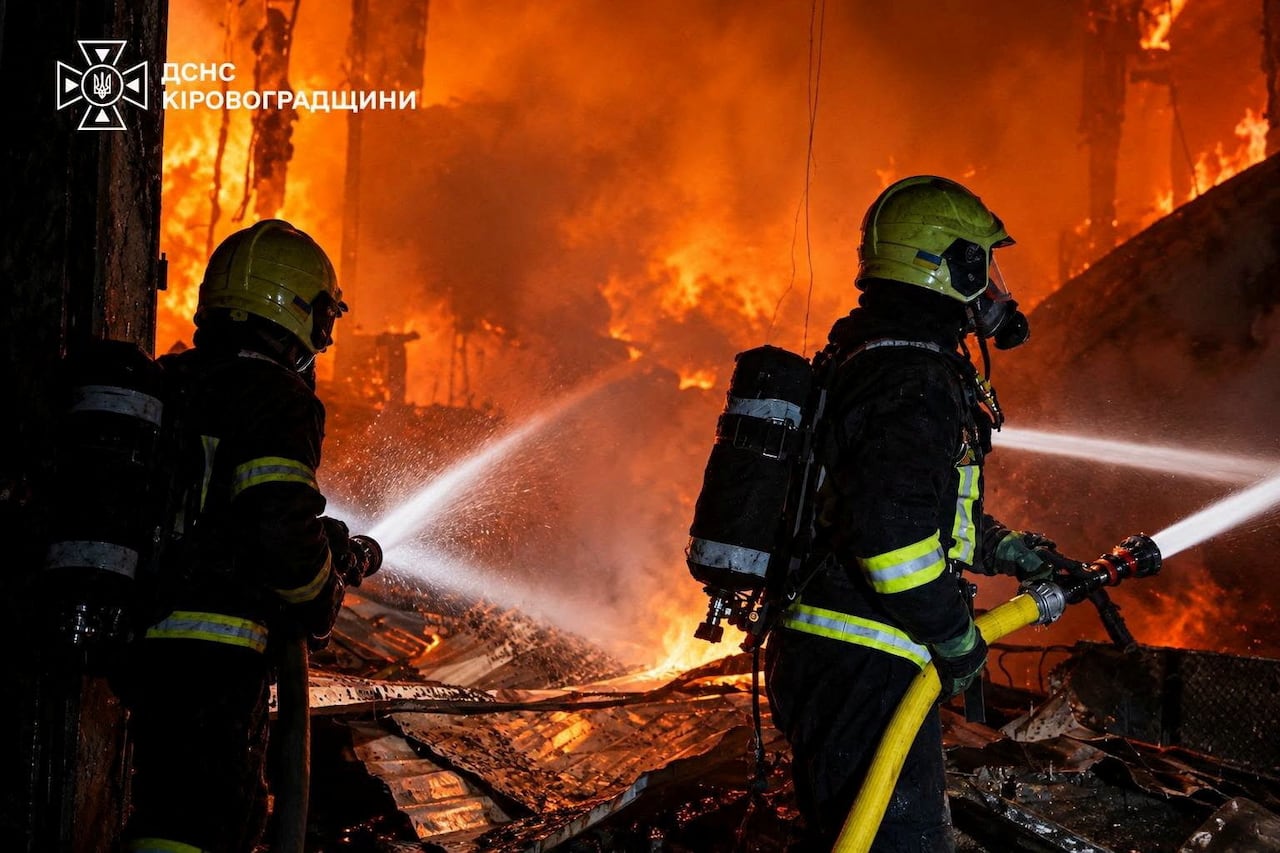
Firefighters respond to the scene of an enterprise affected by a Russian drone strike on Thursday in Kropyvnytskyi. (State Emergency Service of Ukraine/Reuters)
This region, which has been targeted infrequently, faced over 360 drone attacks, as noted by local governor Andriy Raikovych on Telegram.
Additionally, Russia targeted Ukraine’s Naftogaz gas extraction facility in the central Poltava region overnight, according to the company. They stated in a Telegram message that the attack halted operations, damaged equipment, and caused a fire.
On Thursday, Ukraine’s military announced that it had inflicted damage on six Russian Su-34M aircraft during an overnight assault on the Borisoglebsk airfield located in Russia’s Voronezh region. The Su-34M, a sizable fighter-bomber, is valued at tens of millions of dollars each and is frequently utilized by Russia to drop devastating glide bombs on Ukrainian cities near the front lines.
Reuters was unable to independently verify these battlefield claims.
At sea, rescuers were actively searching on Thursday for seven missing crew members from one of two chemical tankers that caught fire overnight just outside Romanian territorial waters in the Black Sea, following incursions by Russian drones into national airspace, according to Romanian officials.
These events follow drone strikes on at least five additional cargo vessels near the shores of Romania and neighboring NATO member Bulgaria in the last ten days, resulting in at least 23 sailors being lost from those incidents, which occurred just outside NATO’s territorial waters.

