
As fears mount regarding a potential Russian assault on NATO soil, the alliance’s leading commander outlined the repercussions of any direct aggression, asserting on Monday that “we will engage in combat.”
However, member nations of the North Atlantic Treaty Organization (NATO) are currently facing a threat that proves to be considerably more challenging to counter, with unidentified drones increasingly patrolling their airspace without restriction.
Alleged Russian drones have repeatedly penetrated NATO airspace along its eastern borders, particularly in nations like Romania and Poland, prompting the organization’s aircraft to take off on numerous occasions to prevent a potential strike.
In addition, there have been countless unidentifiable drones increasingly observed above sensitive locations—including military installations, nuclear facilities, and airports—in NATO member states extending as far west as Germany, Belgium, and France, leading to disruptions at airports and revealing vulnerabilities in defense.
This situation bears the characteristics of a calculated effort to instill fear and uncertainty, and the issue seems to be escalating.
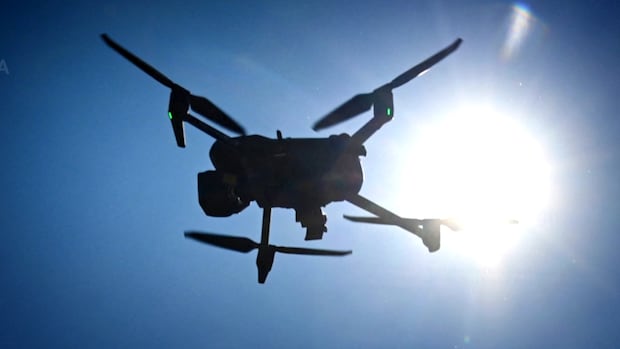
European nations are increasingly concerned due to unknown drones flying over critical sites within NATO territory with seeming freedom. Some experts and leaders in Europe accuse Russia of orchestrating an intimidation strategy, though Moscow denies any involvement.
For example, German officials have recorded over 1,000 suspicious drone incidents since January 2025, as reported by CBC News. This translates to approximately 1.5 incidents daily concerning “critical infrastructure, military sites, and defense-related companies,” according to the Federal Criminal Police Office of Germany.
Furthermore, there were 261 total drone-related disturbances at German airports or within its airspace from January to August, marking an 80 percent year-on-year increase, based on a report obtained by CBC News from the nation’s air traffic control authority.
The enigmatic drones frequently seen across Europe are challenging to detect and intercept, making it difficult to ascertain their origin. However, when analyzed collectively, the patterns strongly indicate they are part of a Russian hybrid warfare strategy, according to defense analysts.

Ulrike Franke is a senior policy fellow at the European Council on Foreign Relations. (CBC)
“There has been an increase in the total number,” stated Ulrike Franke, a leading drone expert in Europe, during an interview from Paris.
“I can confidently say that this is likely, if not certainly, connected to Russian hostility towards Europe, as well as the war Russia is conducting against Ukraine and the conflict it perceives itself to be engaged in against the West.”
Hybrid warfare
Unexplained drone incidents have transpired across Europe for years, fueling claims of a covert “hybrid warfare,” which utilizes unconventional tactics to weaken an adversary while avoiding outright warfare. However, such occurrences surged in number last autumn and now seem to be rising again.
Norway has recorded over 300 incidents thus far this year, resulting in six airport disruptions, a spokesperson informed CBC News. In the United Kingdom, reported drone incidents near military establishments have doubled over the past year. Meanwhile, Belgium witnessed 150 incidents above sensitive locations, according to media reports.
On September 12, a suspected drone sighting caused disruptions to flights at Brussels Airport. A week later, another incident diverted 19 flights from Luxembourg Airport, impacting nearly 2,000 passengers. Four days later, Berlin’s primary airport was closed after a drone was observed above its northern runway.
“This is hybrid warfare,” remarked Elio Di Rupo, a member of the European Parliament and part of its security defense committee, as well as a former prime minister of Belgium, during an interview.
“It’s not just the drone conflict, but also cyber assaults. Collectively, it constitutes a real war, yet we see no one, except for the drones.”

Elio Di Rupo discussed with CBC News in Mons, Belgium, about what he describes as a new kind of warfare. (David Iacolucci/CBC)
Obtaining precise figures proves challenging, complicating efforts to connect the dots throughout Europe.
CBC reached out to 11 national air traffic authorities, several EU agencies, research institutions, think tanks, and NATO.
NATO declined to provide a count, redirecting CBC News to national authorities, which utilize various systems for data tracking. EU organizations also could not furnish data, noting that defense is managed at the national level.
In a recent overview, the International Institute for Strategic Studies (IISS) reported that 144 suspicious drones had flown over sensitive locations with “considerable impunity” across a dozen NATO nations during an 18-month period ending in February.
The report further suggests these drones likely originated from a Russian “shadow fleet”—tankers and other vessels that the nation employs to secretly bypass sanctions and export oil.
Russia has consistently denied all such claims.

This image taken in October 2025 off the coast of France shows the tanker Boracay from Russia’s so-called ‘shadow fleet’ suspected of being involved in drone flights over Denmark. (Damien Meyer/AFP/Getty Images)
The authors of the IISS report clarify that their assertion is not that every drone sighting can be pinned on Russia, but that the overall trend “cannot be sufficiently explained” by alternative factors like human mistakes or misused hobby drones.
Moreover, having a significant number of harmless drones is, “if anything, analytically consistent with Russian operational design: creating an environment of ambiguity,” in which real incursions are difficult to differentiate from benign ones.
Franke concurs that the observed patterns indicate Russia’s involvement: the type of drones, their operational times, and movement patterns.
She also agrees that the uncertainty is intentional.
“Russia gains from our panic and from the inevitability of drone sightings, regardless of the situation,” she remarked.
“This illustrates the cleverness of these hybrid attacks—they are exceedingly difficult to attribute, leading to false positives… and they function exceptionally well, complicating responses in open, democratic societies.”
Turning point
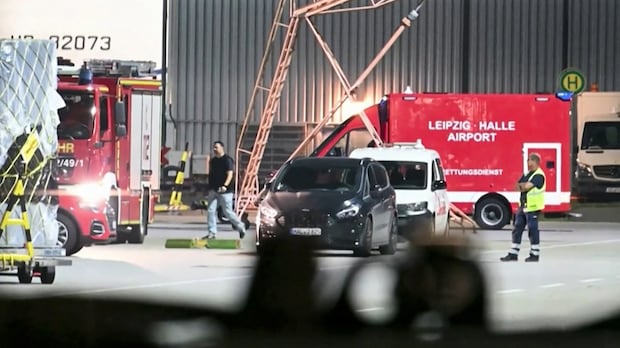
A significant moment occurred on August 4 when a custom-made drone carrying explosives was discovered near a Ukrainian Antonov cargo aircraft at Leipzig/Halle Airport, which serves as a logistical center for support dispatched to Ukraine.
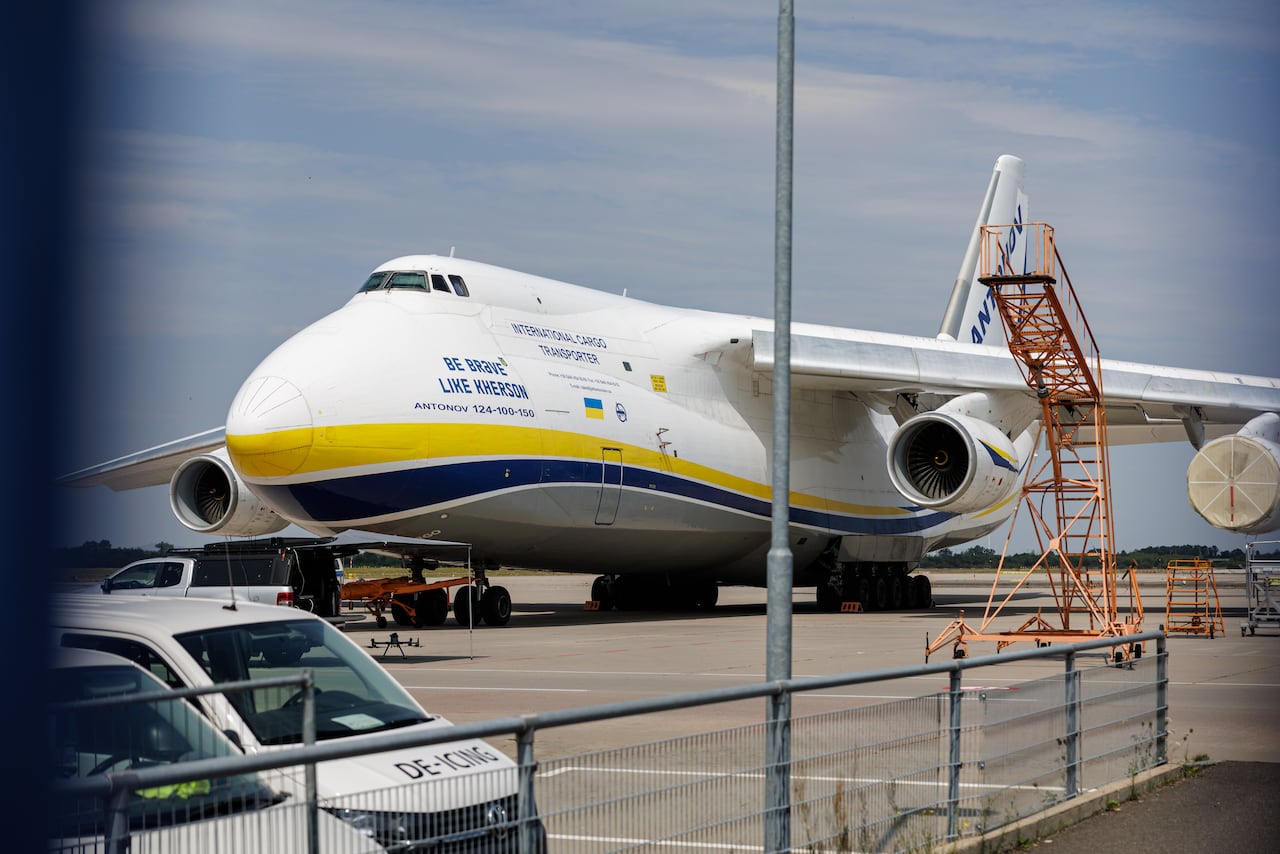
A Ukrainian Antonov cargo plane is seen at Leipzig/Halle Airport on August 5. (Getty Images)
Investigations in Germany concluded that the drone served as concrete evidence indicating Russian participation. The intelligence gathered from the drone has also reportedly been crucial in tracing other intensifying hybrid operations and linking them to Russian intelligence.
The thwarted Leipzig attack represented the deepest penetration into NATO territory by such a perilous effort since Russia commenced its full-scale invasion of Ukraine in February 2022.
“This indicates that Russia is undeniably targeting nations and companies that support Ukraine,” asserted Michelle Haas, an associate fellow in the Europe in the World program at the Egmont Royal Institute for International Relations in Brussels.
“A primary objective is to instill doubt and persuade us that the costs of supporting Ukraine are excessively high.”

Michelle Haas is a PhD researcher at the Ghent Institute for International and European Studies. (David Iacolucci/CBC)
The Leipzig incident has also drawn heightened European focus and prompted a unified response involving diplomatic and economic measures against Russia. Other EU nations and NATO partners, including Canada, issued supportive statements for Germany while condemning Russia.
“Leipzig signifies a new escalation on EU territory directly linked to Russia, yet it forms part of a broader trend of increasingly perilous incidents,” stated European Commission President Ursula von der Leyen at that time, alluding to Russia’s responsibility in the larger context.
Initially hesitant to directly blame Russia due to concerns over escalation, European leaders now seem more willing to do so. However, the challenge remains on how to deter and counter future similar incidents.
Von der Leyen acknowledged that such occurrences might indeed represent “the new normal” in Europe. Still, Haas emphasized that they must be taken “with utmost seriousness.”
Critical infrastructure needs enhanced protection, she advised. Additionally, European leaders must prepare the public for potential future attacks without inciting unnecessary panic while clearly communicating that significant events are unfolding.
“It also raises the question of how we ensure that this does not lead to polarization or destabilization, as that is also part of the intention.”

