
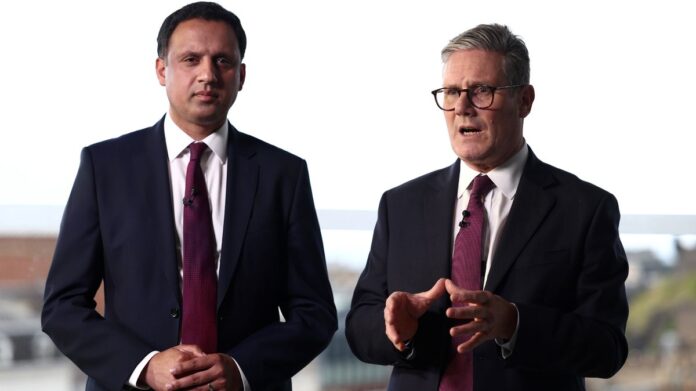
An important development occurred when Anas Sarwar urged Keir Starmer to resign, marking a significant moment in the political landscape. Unlike previous critics who were predominantly left-wing backbenchers with longstanding grievances against Starmer’s policies and leadership, Sarwar, a prominent and influential figure within the Labour party, became the highest-ranking official to advocate for Starmer’s departure.
During a hastily arranged press conference, the Scottish Labour leader delivered a scathing assessment, highlighting numerous mistakes and characterizing the current leadership in Downing Street as a major distraction. Expressing personal anguish, Sarwar emphasized that while Starmer was a friend, his foremost allegiance was to Scotland, underscoring the gravity of his decision amidst heightened drama.
Sarwar’s call for Starmer’s resignation stemmed from the challenging position of Scottish Labour in the upcoming Holyrood elections in May, with concerns that the Prime Minister’s waning popularity would adversely impact the party’s prospects. Despite facing internal turmoil, Starmer received backing from key Cabinet members who orchestrated a unified display of support.
Noteworthy was the public endorsement from Angela Rayner and Wes Streeting, both considered potential successors to Starmer. However, Rayner faced scrutiny over her tax affairs, while Streeting addressed questions regarding his association with Peter Mandelson, whose connections to Jeffrey Epstein have caused controversy within the government.
In response, Streeting proactively released his communications with Mandelson to dispel any insinuations, condemning attempts to tarnish his reputation. Although the Cabinet’s solidarity alleviated immediate concerns for Starmer, the recent resignations of his chief of staff and director of communications, coupled with internal discontent over strategic decisions, have weakened his position within the party.
While dissatisfaction among Labour MPs has escalated, reluctance towards triggering a leadership contest persists, as some fear public backlash for frequent leadership changes. Starmer has temporarily staved off immediate challenges, but uncertainties loom over his ability to weather future crises.

