
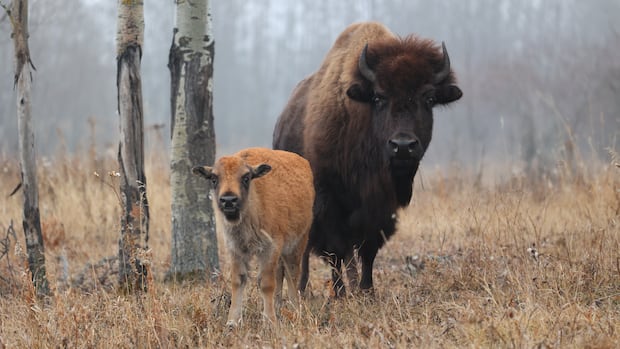
A time existed when bison freely roamed North America in vast herds, their thundering stampedes echoing across the land in shades of rust and auburn fur. Decoding the DNA of these creatures, which were once pushed to the edge of extinction, is unveiling insights into how their decline and gradual return to the landscapes they once ruled have permanently altered this majestic species.
A recent study, detailed in the journal Science, undertook the sequencing of 160 bison genomes, tracing an ancestral journey spanning 20,000 years. Led by Jonas Oppenheimer and the Paleogenomics Lab at the University of California, Santa Cruz, the research involved nearly 40 scientists, with a significant Canadian contribution.
The objective of this research is to inform contemporary conservation efforts by unraveling the complex genetic history of bison. By understanding the genetic makeup of these animals, researchers aim to enhance their survival prospects for the future. Bison, once interconnected across vast territories, now exist in isolated populations carefully managed by humans. The study revealed that the fragmentation of present-day herds poses challenges to their resilience.
In an interview with CBC News, Oppenheimer highlighted the significant genetic differences among bison herds today compared to their uniformity in the past. He attributed this divergence to a historical bottleneck caused by human-induced near-extinction events.
The genome sequencing allowed scientists to map the evolutionary changes in bison species over time. DNA samples were collected from ancient bison bones dating back thousands of years to current living herds. The research team extracted DNA from managed herds in Canada and the United States, as well as from wild herds in various regions.
The study, which included 115 ancient bison genomes and 45 modern ones, combined with previously sequenced data, produced the most extensive genetic map of bison to date. The findings underscore the importance of preserving genetic diversity and managing distinct bison subspecies separately.
The research emphasized the significance of maintaining the genetic integrity of bison herds through collaborative efforts and genetic preservation techniques. The study’s outcomes offer a pathway for reconnecting isolated herds, reducing inbreeding risks, and safeguarding the species’ genetic diversity for future generations.
The study also shed light on the distinctiveness of wood bison and plains bison, revealing their substantial genetic divergence. Efforts to protect and manage these distinct bison subspecies are crucial, given their unique genetic characteristics and historical significance. The findings provide critical insights for conservationists and herd managers striving to enhance the genetic health and diversity of bison populations.

