
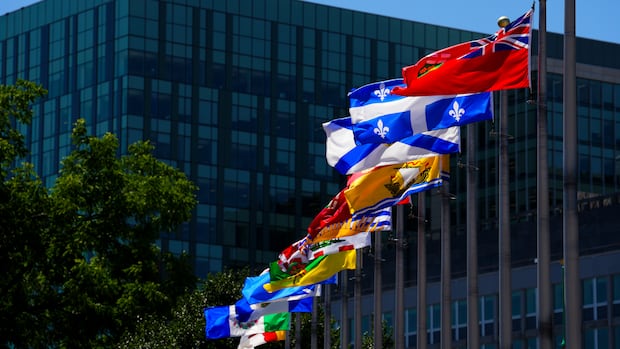
Provincial trade barriers in Canada are under scrutiny following the breakdown of negotiations with the United States. Enhancing interprovincial trade is gaining momentum, with recent agreements among nine provinces allowing direct-to-consumer alcohol sales across borders.
However, even these incremental advancements, such as in the alcohol sector, highlight the complexities of dismantling trade barriers. Additional fees and regulations imposed by provinces on top of existing ones create hurdles for businesses, as noted by Jeff Guignard, CEO of Wine Growers British Columbia.
Guignard criticized the requirement for B.C. wineries to register in other provinces to ship wine, emphasizing the need to streamline trade processes within Canada. The potential economic benefits of removing internal trade barriers are significant, with the International Monetary Fund estimating a potential GDP increase of up to seven percent, equivalent to $210 billion in the long term.
While a CIBC report offered a more conservative projection of a one percent GDP boost, it underscores the importance of pursuing such initiatives. Federal and provincial ministers convened in Iqaluit to prioritize harmonizing regulations and promoting freer flow of services across provinces.
Corinne Pohlmann from the Canadian Federation of Independent Businesses welcomed the renewed focus on removing provincial trade barriers, emphasizing the need for consistent standards and effective implementation. Efforts are underway to identify and address hidden trade barriers through systematic analysis led by University of Ottawa professor Wolfgang Alschner, who highlighted the need for uniform regulations to facilitate smoother trade practices.
Alschner’s research aims to streamline the intricate web of regulatory texts in Canada to enhance trade efficiency. The ultimate goal is to simplify trade processes not just on paper but in practical terms to foster increased economic activity across the country.

