
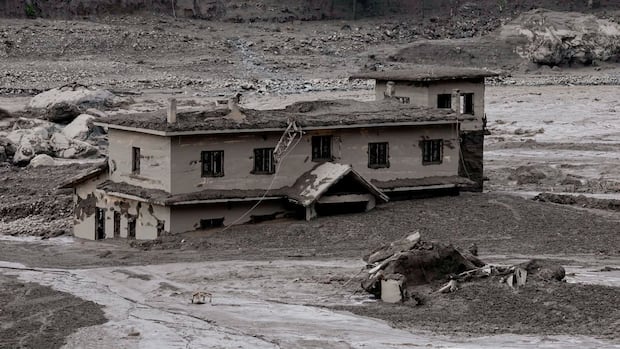
Massive flash floods struck the border region of Nepal and Tibet, resulting in over 160 fatalities and leaving numerous individuals missing, including 24 Canadians. Nepalese authorities confirmed 162 deaths, while China’s state media reported three fatalities and over 558 missing individuals in Tibet’s Gyirong county by early Thursday. Among the missing were 260 foreign nationals, as per CCTV reports.
The Bhotekoshi River overflowed around 9 a.m. local time on Wednesday, causing extensive damage to villages, roads, and hydropower projects in Nepal. Authorities issued alerts to residents in various districts, urging them to avoid the Bhotekoshi, Trishuli, and Narayani riverbanks. Nepali government spokesperson Sasmit Pokharel sought assistance from India and China for rescue operations.
According to Sunil Sharma from the Nepal Tourism Board, 403 people, including 341 foreign nationals and 24 Canadians, were reported missing. Nepal’s ambassador to Canada confirmed the Canadians’ status. Prime Minister Mark Carney expressed sorrow over the disaster, urging Canadians in the region to register with the ROCA system for assistance.
Global Affairs Canada acknowledged the impact on Canadians and noted challenges in communication due to power outages. Security footage from the Chinese side of the border showed people fleeing before being engulfed by the floods. Missing individuals included pilgrims to Mount Kailash from India, the U.S., Australia, and the U.K., with several citizens from South Korea and Malaysia also unaccounted for.
Rescue efforts were ongoing, with reports of 28 missing police officials. Initial assessments suggested a glacial collapse triggered the floods, with support mobilized by the United Nations and Chinese and Indian authorities. The region’s vulnerability to extreme weather events was emphasized, attributed to accelerating glacier melt and climate change impact.
The disaster-stricken areas, previously affected by flash floods, faced similar challenges due to climate change. The Himalayan region, warming faster than global averages, faces heightened risks of floods, landslides, and other climate-related hazards. Researchers highlighted the urgency for early warning systems and adaptive measures in the region.

