
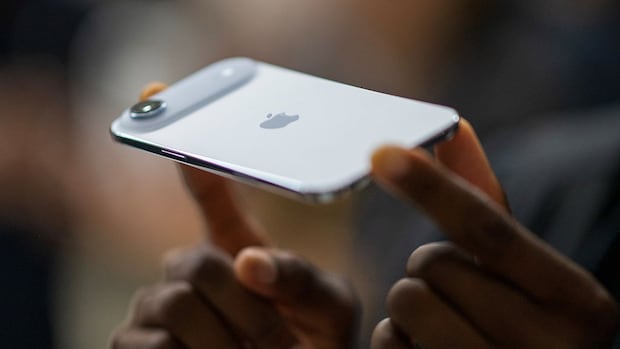
“Lake America” Designation Now on Google Maps, and President Donald Trump is urging Apple to do the same with the default map app on iPhones.
Experts in the technology industry point out a concerning reality for many Canadians and businesses: they are heavily reliant on U.S.-based platforms with limited non-American alternatives available.
Anne Pasek, a Canada Research Chair at Trent University in Peterborough, Ontario, emphasized that Canadians are significantly impacted by American tech companies, subjecting their digital activities and related aspects to U.S. jurisdiction.
WATCH | Canadian government websites show ‘Lake America’:
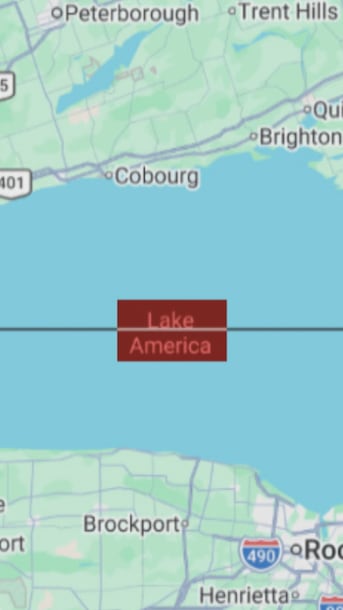
Recently, various Canadian websites, including government platforms and major banks, have shown maps renaming Lake Ontario to Lake America.
Changes in labeling on Canadian websites, including federal government sites and major banks, have been observed, with Lake Ontario being rebranded as Lake America.
This alteration came in response to an executive order from President Trump, instructing the renaming of a Great Lake amid escalating trade tensions between the two countries.
Google implemented the change for U.S. users while offering the option for non-U.S. websites to display “Lake Ontario” by localizing their maps to Canada.
The company mentioned, “These updates align with our standard practice for bodies of water with different names across countries.”
U.S. Interior Secretary Doug Burgum stated in an interview with Fox Business that Trump had requested Apple to change Lake Ontario to Lake America on its applications. Apple has not issued any comments in response to inquiries from CBC News.
Aside from providing navigation services to numerous users, mapping tools from major U.S. tech companies are integrated into the operations of many Canadian businesses, offering vital information such as contact details, reviews, and operational hours.
These mapping tools facilitate various functions like address auto-completion on e-commerce websites and enable monitoring of traffic and road conditions for rideshare and food delivery applications.
Pasek highlighted the dominance of these tech platforms, stating that users are essentially tied to them.
Will the U.S. Pursue Tech-Driven Strategies Against Canada?
Emily Osborne, a policy research associate at the Canadian Shield Institute, raised concerns about potential tech-related vulnerabilities Canada faces due to its reliance on American companies like Google and Apple.
She suggested Dutch companies TomTom and HERE Technologies as alternatives to Google and Apple for basic navigation services.
Previously, Canada had a domestic option in Toronto-based Avenza Systems, which was acquired by Blue Marble Geographics based in Maine earlier this year.
Osborne expressed worries that amidst escalating tensions between the two countries, the U.S. government may exploit other tech-related avenues to exert pressure on Canada, specifically mentioning payment processing and cloud storage.
She cited the AWS outage from last year as an example of the potential impact on Canadian businesses relying on U.S.-owned digital infrastructure, emphasizing the lack of Canadian alternatives for services like credit card payments.
Tag: rewrite-pending</

