
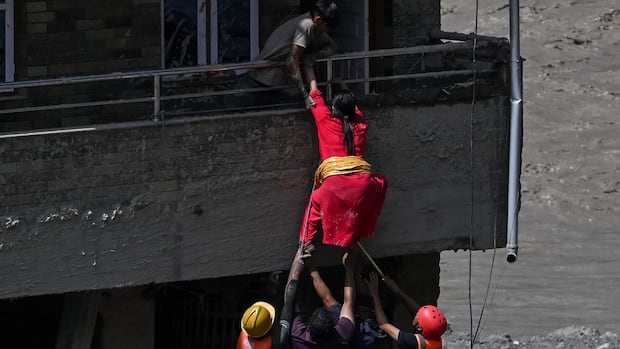
Rescue operations are underway along the Nepal-Tibet border as search teams look for hundreds of individuals missing following a catastrophic event triggered by a glacier collapse. The devastating flood of water and mud, reaching several stories high, ravaged communities in the area. According to reports from authorities in Nepal and China, over 390 people have lost their lives, with more than 1,400 individuals still unaccounted for. Additionally, Reuters states that at least 359 casualties have been reported, and nearly 1,000 people are missing, including citizens from various countries worldwide.
Among those missing are Canadian nationals, with concerns raised about 30 Canadians and permanent residents in Nepal and Tibet whose whereabouts remain unknown. A couple from British Columbia, Dhaval and Megha Shah, are among the missing, as confirmed by their relative, Nikita Shah. The Shahs were on a spiritual journey in Nepal, staying at Hotel Kailash, and the last contact with them was on Tuesday night.
In response to the situation, Global Affairs Canada is dispatching five consular officials to Kathmandu to assist Canadians and collaborate with local authorities. The Nepal Tourism Board had initially reported 25 missing Canadians. The region’s challenging terrain, including steep valleys, has posed obstacles for rescue efforts, with numerous buildings covered in mud, debris scattered, and infrastructure severely damaged.
The United Nations has allocated $2 million from the Central Emergency Response Fund to aid in medical care, shelter, and water provisions. Most of the casualties and missing persons are in Nepal, with additional incidents reported in Tibet. The Nepalese army has conducted helicopter rescue missions, saving over 100 individuals from flood-affected areas. The rescue focus has shifted to relief operations, with thousands displaced and extensive damage to infrastructure reported in the affected districts.
Experts attribute the flash flood to a glacier avalanche, emphasizing the accelerated melting of glaciers in the region due to climate change. The US Geological Survey identified the event as a glacier collapse rather than an earthquake, leading to the catastrophic flooding. The frequency of glacier-related disasters is increasing, with warming temperatures exacerbating glacier melt in the Himalayan region.
Efforts to locate missing individuals and provide assistance to affected communities are ongoing as authorities contend with the aftermath of the natural disaster. The resilience of the affected regions will be tested as they recover from the devastating impact of the glacier collapse-induced flash flood.

