


Lady Gaga wowed a full house of 23,000 attendees with her remarkable talent and vibrant performance at the Manchester Co-op Live Arena. Meanwhile, in a starkly different setting just three miles away, another lady, who once captured the public’s fascination, left the sparse audience longing for days gone by.
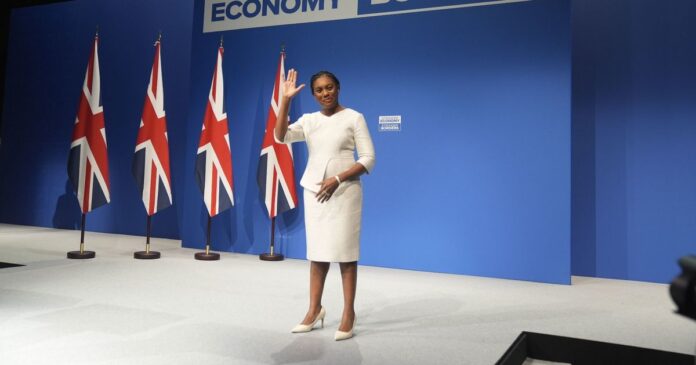
This year’s Conservative conference was overshadowed by the ghostly presence of Lady Thatcher, with tributes to her legacy prominently displayed throughout. The event featured glass cases showcasing her iconic power suits, a large mosaic portrait, and a dedicated Thatcher Theatre. Attendees could purchase various Thatcher-themed merchandise, and nearly every speaker reminisced about her past achievements.
Amidst an almost excessive display of admiration, the event took on an almost surreal tone, especially considering Thatcher passed away over a decade ago. The speeches delivered were lackluster, exemplified by Chris Philp’s failed attempts at humor that left the audience cringing. Furthermore, a misspelling of “Britain” on the complimentary chocolate bars highlighted the lack of attention to detail.
In an attempt to regain popularity following poor polling results, shadow ministers introduced a series of impractical and unfunded policies. These proposals included controversial measures such as targeting liberal judges, reducing foreign aid, and imposing harsh restrictions on immigration, which were met with skepticism from both inside and outside the conference.
Critics pointed out the shift in the party’s ideology, likening their current direction to that of former US President Donald Trump. Questions arose about why these extreme measures were not implemented during the party’s 14-year tenure in power, which left the country facing economic challenges and strained public services.
The conference’s rhetoric about “taking back the country” raised doubts about which era they sought to return to, given past controversies such as austerity measures, Brexit, and economic setbacks. The lack of a cohesive vision for the future further undermined the party’s credibility among voters.
Despite efforts to rejuvenate the party’s image, comments from prominent figures like Robert Jenrick only served to reinforce negative stereotypes. The party’s internal struggles and a growing exodus of members suggest a looming crisis, with potential leadership changes on the horizon.
Ultimately, the Conservative Party’s refusal to acknowledge its past failures and embrace a more inclusive future may lead to its downfall. The party’s reluctance to evolve and its nostalgia for outdated policies risk alienating voters and relegating them to irrelevance in the political landscape.