
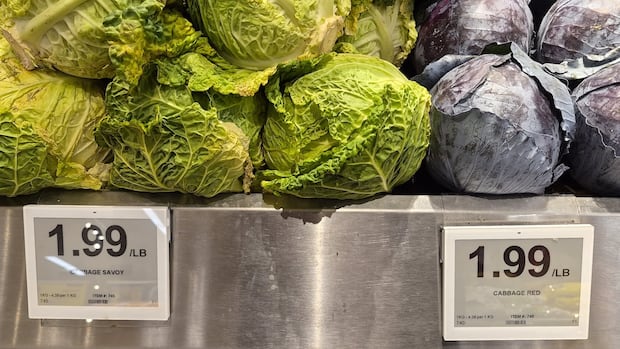
After facing significant criticism from customers, Loblaw has decided to reinstate country-of-origin labeling on produce signs in its stores. The controversy arose when shoppers noticed that the information indicating where the food was grown had been omitted from the produce displays.
Karla Hennig, a dedicated “Buy Canadian” shopper from Penticton, B.C., expressed disappointment over the lack of transparency in her local Superstore. She emphasized the importance of knowing what one is consuming and felt that the absence of origin details was disrespectful to consumers.
While Loblaw made the change nationwide, except for Ontario and Quebec where provincial regulations require such transparency, customers in other provinces expressed their dissatisfaction on social media platforms. The timing of the policy alteration coinciding with Canada-U.S. trade tensions heightened concerns about supporting Canadian products.
One Edmonton resident, Karl Mueller, raised his concerns about the absence of country-of-origin labeling at his local Real Canadian Superstore. Mueller highlighted the necessity of supporting Canadian businesses, especially during times of economic uncertainties and trade disputes.
Agricultural economist Ellen Goddard predicted Loblaw’s reversal of its decision, attributing it to the heightened emotions surrounding trade issues. Subsequently, Loblaw responded to inquiries by announcing measures to assist shoppers in purchasing Canadian products, including reinstating country-of-origin information on produce signage.
The reintroduction of the labeling policy was cautiously welcomed by some customers, who appreciated the power of consumer influence in shaping corporate decisions. However, Loblaw had initially defended its stance, citing challenges related to sourcing fluctuations and availability.
Despite regulatory challenges faced by Loblaw, including fines from the Canadian Food Inspection Agency for incorrectly promoting imported goods as Canadian, the grocer had maintained its position on dropping the labeling. However, public pressure and concerns about trust and transparency led to the reversal of the decision.
Similar to Loblaw, other grocers like Sobeys have also faced scrutiny over labeling practices, indicating a broader issue within the industry. While federal regulations do not mandate country-of-origin labeling on store signage for bulk produce, consumers and experts have called for clearer regulations to ensure transparency and informed consumer choices.

