
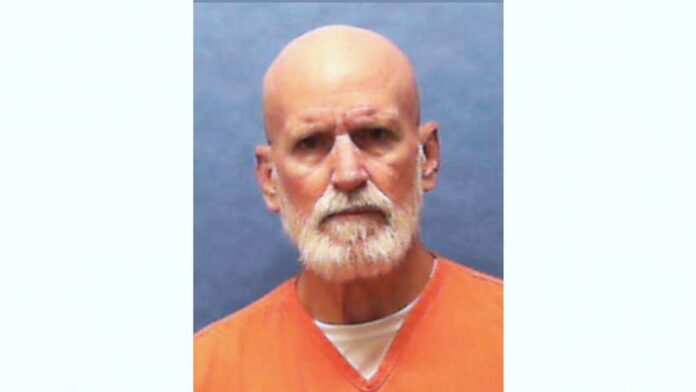
A man who kidnapped, sexually assaulted, and killed a six-year-old girl has been put to death on death row.
Bryan Frederick Jennings was found guilty over 45 years ago for the murder, abduction, burglary, and sexual assault of Rebecca Kunash. He took the girl in his vehicle to a canal, where he sexually assaulted her.
At the age of 20, Jennings forcefully threw the girl to the ground, causing a fatal skull fracture, before drowning her in the canal. The victim’s body was discovered later that same day.
Recently, Jennings, now 66, was executed on death row at a prison near Starke, Florida, where he had been imprisoned since the incident. The execution, carried out through a three-drug injection, marked the 16th execution in Florida this year.
Jennings, a former US Marine, opted not to make a final statement before his execution. The Department of Corrections spokesperson confirmed that the process went smoothly without any issues.
Following the rape of the girl, Jennings was apprehended on an unrelated traffic offense. He matched the description of a man observed near the Kunash residence at the time of the disappearance. Evidence such as matching shoeprints, fingerprints on the windowsill, and wet clothing and hair tied Jennings to the crime scene.
Despite two prior death sentence convictions being overturned on appeal, Jennings was eventually convicted and sentenced to death in 1986 for the 1979 Brevard County homicide. He also received life sentences for kidnapping, sexual assault, and burglary.
Governor Ron DeSantis, who authorized the execution, has overseen more executions this year than any other Florida governor since the reintroduction of the death penalty in 1976. The state’s previous execution record of eight was set in 2014.
The state has two additional executions scheduled for November 20 and December 9, potentially bringing the total number of executions in Florida to 18 for the year.
Governor DeSantis explained that the surge in executions was driven by the need to provide closure and justice to the victims’ families. He emphasized the importance of timely justice, stating that he would not proceed with executions if there were doubts about the guilt of the individuals involved.

