
WARNING: This article includes information about violence against children and a suicide attempt.
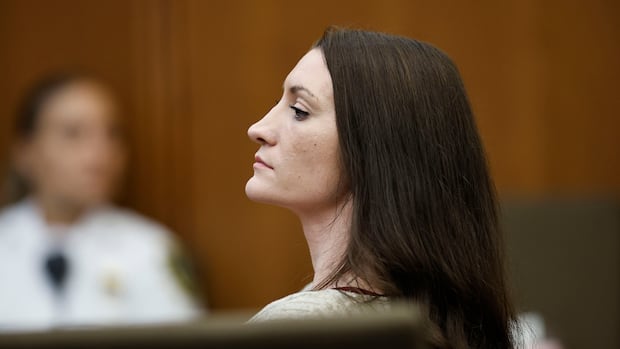
The trial of Lindsay Clancy, a mother accused of strangling her three young children, wrapped up its testimonies on Wednesday, shedding light on postpartum mental health issues. Clancy, 36, faces murder charges for the deaths of her five-year-old, three-year-old, and eight-month-old children in January 2023 in Duxbury, Mass. She has entered a plea of not guilty by reason of lack of criminal responsibility, citing postpartum psychosis as a contributing factor.
Closing arguments are scheduled to commence on Thursday, followed by the jury’s deliberation.
Postpartum psychosis, a rare mental condition, has been linked to the challenges of post-childbirth stress, sleep deprivation, and hormonal changes.
Forensic psychiatrist’s testimony
Prosecutors allege that Clancy meticulously planned the killings and was fully aware of the consequences of her actions. Despite being in the fifth week of the trial, Clancy did not testify. The defense presented 10 witnesses, including acquaintances and family members, while the prosecution called over 70 witnesses, including Clancy’s ex-husband.
In the latest testimony, a forensic psychiatrist from the University of Virginia and a senior psychiatrist at the FBI’s Behavioral Analysis Unit refuted Clancy’s claim that she acted on the orders of a voice. The psychiatrist, Dr. Gregory Saathoff, highlighted that Clancy demonstrated control and methodical planning during the tragic events.
According to Saathoff, the sequence of events, including the children’s deaths and Clancy’s suicide attempt, indicated a level of deliberate decision-making without external guidance.
Despite Clancy’s assertion that the voice ceased after the killings, Saathoff found her account inconsistent with typical psychiatric patterns.
Challenges to psychiatrist’s expertise
During cross-examination, defense attorney Kevin Reddington questioned Saathoff’s qualifications in postpartum psychosis and raised concerns about his associations with law enforcement agencies. Saathoff defended his expertise, citing past experience treating women with postpartum psychosis.
Reddington highlighted Clancy’s efforts to seek help by researching postpartum depression, consulting multiple healthcare providers, confiding in her family about her mental state, and contacting a suicide hotline. These efforts, Reddington argued, demonstrated Clancy’s recognition of her struggles and sincere attempts to address them over time.
Saathoff refuted the suggestion that Clancy’s actions stemmed from a desire to escape her responsibilities, emphasizing the severity of her mental health challenges.
If you or someone you know is in need of support, here are some resources:
- Canada’sSuicide Crisis Helpline: Call or text 988.
- Provincial and territorialmental health support.
- Kids Help Phone: 1-800-668-6868. Text 686868. Live chat counseling available on<a class="link-_o8iA html-anchor" href="http://www

