

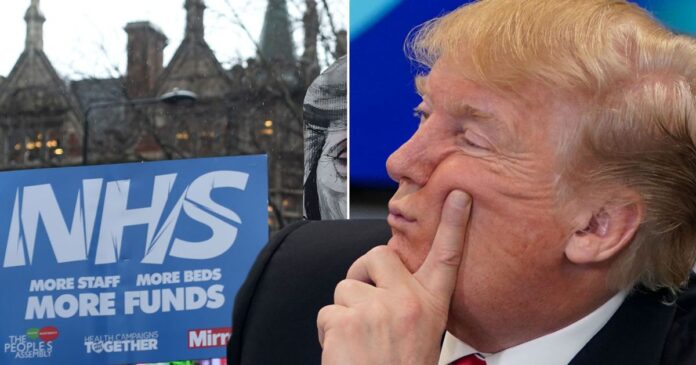

Health leaders have cautioned that President Trump’s pressure on the NHS to increase spending on medicines may lead to job losses and longer patient waiting times. The NHS Confederation and NHS Providers have expressed concerns in a joint statement, emphasizing that the current budget does not cover the costs of redundancies, strikes, and higher medicine prices. The looming threat of a US trade deal negotiation, which could compel the NHS to pay significantly more for drugs, poses a risk to the Labour Party’s NHS recovery efforts.
A proposed 25% increase in drug “value for money” thresholds is projected to create a significant deficit in the NHS budget, potentially resulting in delayed treatments for patients. President Trump’s tariff threats on drug imports from UK companies have spurred pharmaceutical firms to withdraw investments due to the NHS’s negotiated lower drug prices.
According to Daniel Elkeles, the chief executive of NHS Providers, the NHS faces a critical decision between financial stability or potential service cuts and increased deficits. Matthew Taylor, chief executive of the NHS Confederation, has highlighted the challenges posed by unanticipated costs such as higher drug prices, redundancy payments, and potential industrial action, which could impede progress on essential waiting time targets and broader NHS reforms.
The NHS stands to lose around £1.5 billion this year from a possible deal with the US on elevated medicine prices, exacerbating existing funding gaps. Leaders warn of a funding shortfall of up to £3 billion, which could lead to extended patient wait times and potential care rationing. The financial strain may force trusts to scale back services, impacting procedures that enhance quality of life but are not life-saving.
Chancellor Rachel Reeves is set to announce the UK’s autumn budget on November 26, with ongoing discussions between Health Secretary Wes Streeting and the Treasury. The Department for Health and Social Care has defended its commitment to NHS funding, citing substantial investments in digital transformation and urgent repairs.
Productivity within NHS acute hospital trusts in England has shown a 2.7% growth despite a 5.8% increase in activity and a 3% rise in costs between 2024 and 2025. However, progress in reducing the backlog of routine hospital treatments has stalled, with waiting lists surging to 7.41 million, signaling a precarious stage in the NHS recovery.
Since Labour took office in 2024, the NHS waiting list in England has steadily risen to 7.6 million, with a temporary decline of 220,000 in the first year under the new government. Efforts to address the backlog are hindered by limited upfront funding for necessary redundancies.
NHS leaders are striving to maximize productivity and savings amid financial constraints, but the lack of government support for redundancy costs could impede long-term savings. A candid assessment and dialogue on achievable goals within the current financial climate are urged as part of the upcoming Budget to align with the government’s health plan objectives.