
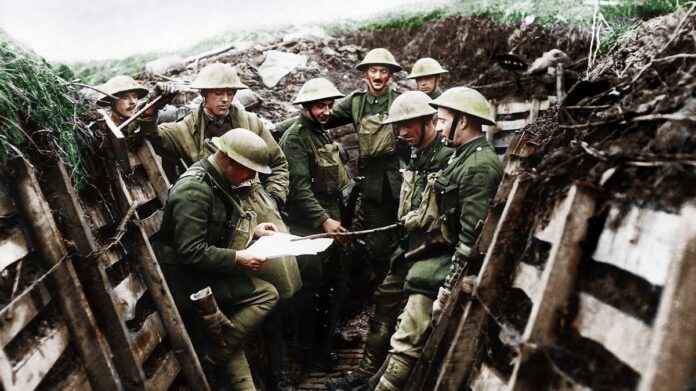
On this day, we honor the memory of those who bravely sacrificed their lives in conflicts worldwide, particularly the young soldiers who fought in the world wars. The First World War revolutionized warfare with technological advancements, leading to extensive bloodshed on both sides.
British soldiers during the war knew the risks they faced on the front lines and prepared for the possibility of not returning home. Many soldiers, unsure if their remains would be recognizable after the intense combat, used spoons to ensure their identification.
The soldiers’ practice of engraving their names or service numbers on metal spoons and placing them in their boots or puttees was a precaution against being lost or unidentified in the chaos of battle. Puttees, fabric strips wrapped around soldiers’ legs and boots, served to protect against mud and provide ankle support.
The importance of this identification method was evident during the Battle of the Somme, where thousands of British soldiers perished. These engraved spoons served as a backup to the fragile ID tags of the time, ensuring that even if their bodies were damaged or looted, their identity could still be confirmed.
The First World War, lasting from 1914 to 1918, claimed the lives of millions of military personnel and civilians, including over a million men by the end of the conflict. Today, on Remembrance Sunday, we pay tribute to the sacrifices of individuals from the UK and Commonwealth in past conflicts, with a special focus on the 80th anniversary of World War Two in 2025.
A Remembrance service at the Cenotaph will be attended by the royal family, politicians, armed forces representatives, and veterans, followed by a two-minute silence, wreath-laying, and a march of nearly 10,000 veterans organized by the Royal British Legion.

