
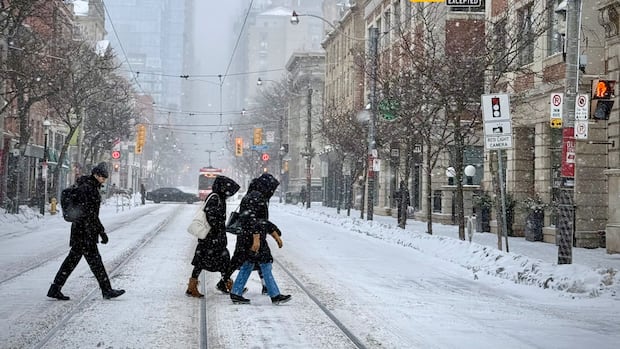
Waymo is set to expand its operations to Toronto, facing the challenge of navigating snowy conditions that require additional training and data collection efforts. The American company announced its plans to commence testing in Canada’s largest city with drivers at the wheel to conduct mapping and safety validation work. The ultimate aim is to introduce driverless taxi services by 2028.
To ensure their technology can adapt to Toronto’s unique driving conditions, Waymo will conduct tests around the clock on all days of the week. Toronto’s winter weather, characterized by snow, poses a significant challenge that Waymo has yet to address commercially, according to Steven Waslander, a University of Toronto Robotics Institute professor.
Autonomous vehicles rely on various sensors like cameras, radar, and lidar systems to navigate their environment. However, adverse weather conditions, such as snow and ice, can hinder the effectiveness of these sensors, making it more challenging for the vehicles to detect objects and make informed decisions. Waymo has primarily operated in warmer cities like Los Angeles and Phoenix, which experience minimal precipitation, avoiding the complexities of snowy conditions.
The company is now venturing into snowy regions like upstate New York and Michigan to enhance its technology for winter driving. While Waymo has accumulated significant experience in snowy weather driving, continuous data collection and training are essential to improve their system’s capabilities in adverse conditions. Utilizing engineering solutions, such as incorporating weather-specific training data, is crucial for enhancing the performance of autonomous vehicles in challenging weather scenarios.
Incorporating heaters and mini windshield wipers to maintain clear sensors, Waymo vehicles act as mobile weather stations, collecting real-time data on weather conditions. Despite these advancements, Waymo has yet to validate its driverless system for complete operation in snowy conditions as of August 2025. However, with planned expansions into snowy markets and the accumulation of more winter driving data, Waymo aims to overcome these challenges before launching its ride-hailing service in Toronto in 2028.
Experts suggest a phased approach to deploying autonomous vehicles, starting with operation in favorable weather conditions and gradually expanding to handle more adverse conditions as the technology improves. This iterative process, coupled with ongoing data collection and training, is expected to take several years to fully optimize autonomous driving capabilities in challenging weather environments.

