
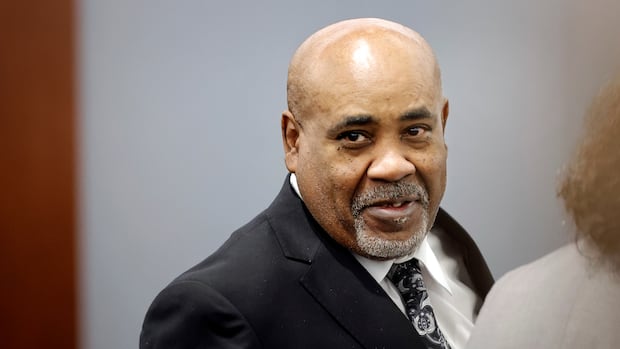
In a 2008 police interview audio recording played to jurors on Thursday, Duane (Keffe D) Davis disclosed that his nephew Orlando (Baby Lane) Anderson was the one who fired the shots that resulted in the death of rapper Tupac Shakur in 1996 in Las Vegas. Davis, who claimed to have been in the car with Anderson during the incident, is facing accusations of orchestrating the killing of the 25-year-old hip-hop icon.
During the interview with the Los Angeles police, Davis mentioned that his nephew, Anderson, had already passed away for ten years by the time of the discussion. He recounted that they were in a white Cadillac with two other individuals when they pulled up next to a car containing Shakur and Marion (Suge) Knight, the hip-hop mogul and head of Death Row Records.
Davis stated in the recording played for the jurors that if the positioning had been different, he would have taken action himself. However, due to Knight’s car being on the opposite side, he passed his gun to Deandre “Big Dre” Smith, who declined to take it. Anderson, seated in the back, then grabbed the weapon and fired the shots, according to Davis.
The courtroom was filled with a tense atmosphere as the transcription of the audio recording was displayed on the screen for jurors to follow. Davis’s family members and Shakur’s relatives were present, observing the proceedings quietly.
This marked the first instance where Davis openly discussed his role in the shooting with law enforcement. The interview holds significant importance in the prosecution’s case against the 63-year-old Davis, as highlighted by the prosecutors during their opening statements. They emphasized leveraging Davis’s own statements from police interviews, podcasts, and his co-authored memoir, “Compton Street Legend.”
Davis, who has pleaded not guilty, has been defended by his lawyer, who dismissed the prosecution’s narrative as fictional. The lawyer argued that Davis’s accounts of involvement were baseless and criticized the lack of evidence supporting the allegations.
Initially considered a suspect in the unsolved 1997 shooting death of Shakur’s rival, the Notorious B.I.G., Davis was later ruled out by investigators. Moreover, the detectives conducting the interview assured Davis of confidentiality, yet prosecutors argue that his subsequent public discussions about the incident have nullified any such agreement with law enforcement.
Allegedly, Shakur’s killing was in retaliation for an earlier altercation where Shakur’s entourage had assaulted Anderson at the MGM Grand after a Mike Tyson fight. Although present at the fight, Davis was not involved in the altercation.
In his narrative in “Compton Street Legend,” Davis recounted witnessing Shakur hanging out of a black BMW later in the evening after the Tyson fight. He also mentioned believing Knight to be deceased following the gunfire initiated by Anderson.
Despite his tragic demise, Shakur’s legacy endures as an enduring cultural icon and one of the most influential and versatile rappers of all time, continuing to captivate audiences decades after his passing.

