
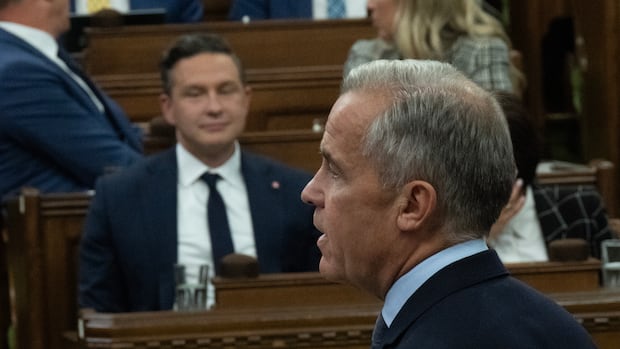
Conservatives are urging the Liberal government to disclose the contents of the U.S. tariff agreement that was rejected last week. While some experts advocate for transparency to enhance national unity, others argue that revealing the details could weaken Canada’s negotiating position.
Following failed trade negotiations, U.S. President Donald Trump imposed 50 per cent tariffs on numerous Canadian imports over the weekend, despite signs of progress during the talks.
Prime Minister Mark Carney stated that the American demands were excessive and the offers inadequate for a final agreement to be reached.
Conservative Members of Parliament are pressing for full transparency regarding the rejected agreement’s specifics.
During a press conference on Tuesday, Conservative Leader Pierre Poilievre emphasized the importance of disclosing the proposed text to Canadians for clarity on the government’s decisions.
Bloc Québécois Leader Yves-François Blanchet expressed openness to releasing the details, mentioning that it is not essential now that a deal was not reached.
Trade lawyer Lawrence Herman stressed the necessity of confidentiality in trade negotiations to prevent undermining Canada’s position in future talks.
Carlo Dade, from the University of Calgary, supported full transparency, noting that the U.S. trade demands align with global trade trends.
Despite calls for transparency, Finance Minister François-Philippe Champagne highlighted that key details were publicly available through media coverage.
Conservative Leader Pierre Poilievre argued that the negotiation details were likely known to American negotiators if an agreement was near.
Former Alberta Premier Jason Kenney cautioned against assuming a final text existed, highlighting the complexity of trade negotiations.
Experts differ on the level of transparency needed, with some advocating for broad trade goals to be shared publicly.
Amidst discussions on releasing negotiation details, the unique circumstances of the Canada-U.S.-Mexico Agreement and tariffs under Section 338 were considered.
Carlo Dade emphasized the significance of transparency to maintain national unity and prevent division among Canadian provinces during trade disputes.

