
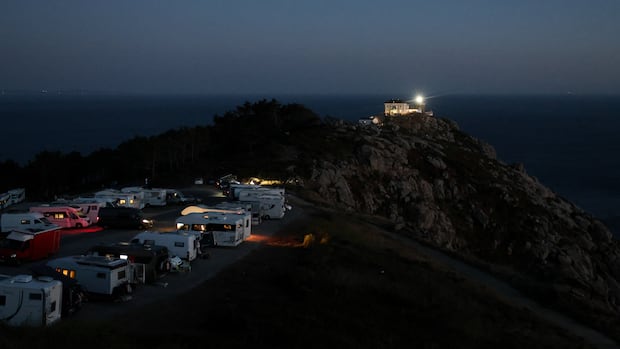
Hundreds of thousands of tourists have flocked to Spain in anticipation of witnessing the solar eclipse happening on Wednesday. However, the event coincides with high temperatures and an increased risk of wildfires in Spain, prompting concerns for authorities to prevent any fire damage resulting from the surge in astrotourism.
Virginia Barcones, the secretary general for civil protection and emergencies at Spain’s Interior Ministry, emphasized the need to limit activities that could potentially ignite fires due to the challenging wildfire season Spain has been facing. With over 400 fires scorching more than 603,000 acres of land this year, authorities are on high alert.
To mitigate the risk of additional fires, 35,000 officers will be deployed to monitor large outdoor gatherings during the eclipse. Spain is a prime location for viewing the solar eclipse, as the path of totality spans across several countries including Spain, Russia, Greenland, Iceland, and Portugal.
For safety, viewers are advised to use eclipse glasses to protect their eyes. The last time a full solar eclipse was visible from mainland Spain was 120 years ago, generating significant excitement and a surge in travel. Special measures have been put in place to accommodate the large crowds expected to witness the rare celestial event.
Authorities have designated 660 official viewing sites to manage the influx of over 440,000 people, with an estimated 1.5 million individuals expected to travel to these locations. Despite the wildfire risk, the eclipse is projected to boost Spain’s economy by over 347 million euros.
Dry conditions and heightened fire fears persist in Spain, with three major wildfires still burning across different provinces. The forest fire index is forecasted to reach critical levels on the day of the eclipse, posing a significant risk. Human activities cause most wildfires, highlighting the importance of caution during this period.
As the eclipse approaches, temperatures are expected to soar, with some regions reaching up to 40 degrees Celsius. The eclipse duration and visibility will vary by location, with Spain entering totality closer to sunset. Despite the challenges, the allure of the eclipse continues to captivate travelers, emphasizing the profound impact of natural phenomena on human experiences and reflections.

