
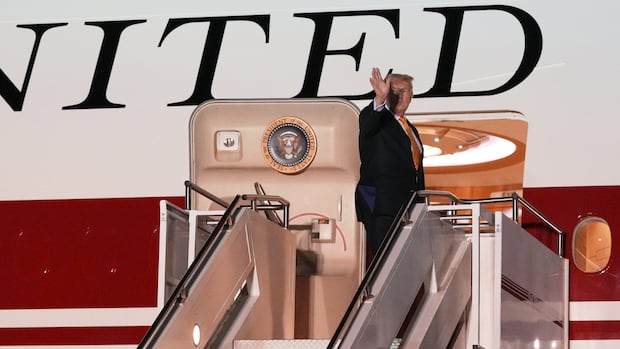
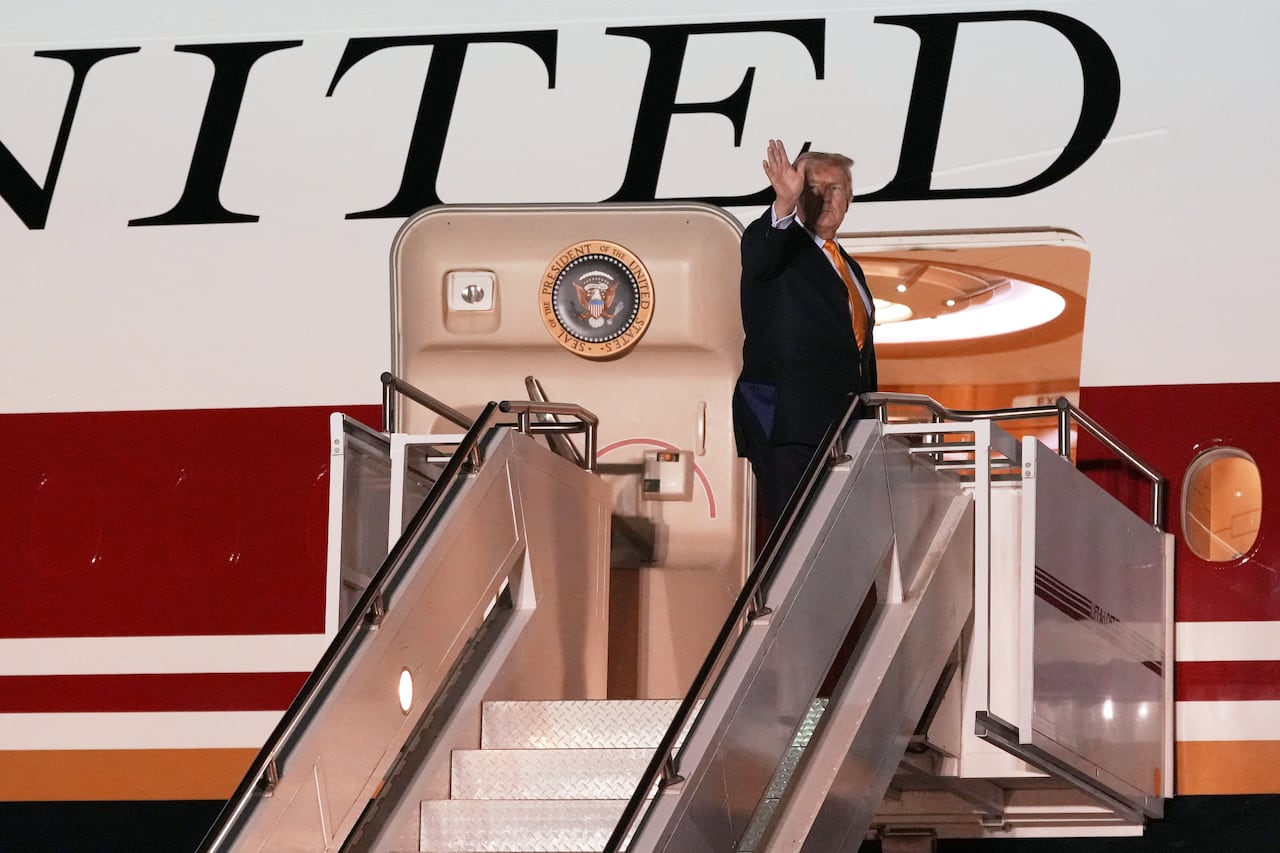
The discreet actions that led to the departure of U.S. President Donald Trump from a plane in Turkey last month, leaving reporters and White House staff behind, are unprecedented in recent history and have raised lingering inquiries.
After attending a NATO summit in Ankara, Trump was covertly moved from Air Force One to a military aircraft using a catering truck due to an alleged Iranian assassination threat, as reported by U.S. media.
The White House did not reveal the shift, even though reporters and some White House staff were on Air Force One, and the incident remained undisclosed until the Washington Post broke the story on Monday.
Trump, stating on Tuesday that he was following the instructions of the U.S. Secret Service, was accompanied by several close aides to the smaller military plane.
Former CIA director John Brennan, a vocal critic of Trump whom the president views as a prosecutable adversary, emphasized on Tuesday that the White House had an “ethical obligation” to inform the press pool.
“None of the presidents I served for would have allowed the White House staff and a plane full of journalists to proceed if the threat had not been adequately mitigated for the president’s safety,” Brennan told MS Now.
‘For old time’s sake’
Trump had initially flown to the summit in a newly renovated jet donated by Qatar but announced during the event that he would use the older Air Force One for nostalgia when departing for the U.K. This statement intrigued the press, given Trump’s previous criticisms of the two Air Force One planes in use since 1990.
The trip to Ankara marked the debut overseas flight of the new plane following rapid upgrades that raised questions about its cost and security.
New York Times journalist Maggie Haberman suggested that there might have been an off-the-record discussion with the press regarding the arrangements that kept them off Air Force One.
“The press could have been briefed off the record, and they could have reported it later without risking anyone,” she mentioned on Wednesday’s episode of The Daily podcast.
A similar incident occurred in 2000 when a reporter kept confidential information for 25 years before disclosing it in light of recent revelations.
Susan Page of USA Today recounted an incident from 2000 when President Bill Clinton used an unmarked executive jet while sending Air Force One as a decoy during a trip to Pakistan.
“They informed me about the extraordinary security measures taken due to the risks of flying there, including the use of a decoy plane,” she recalled. “The risks extended to the journalists covering the trip and President Clinton.”
It is uncertain if the Trump administration considered a similar approach, given its strained relationship with various media outlets. The administration previously attempted to subpoena some of Haberman’s colleagues at the Times over a report on security concerns related to the Qatari jet, eventually backing down after a federal judge criticized the government’s treatment of reporters.
Haberman expressed feeling “unsettled” upon learning about the plane switch but questioned whether the reporters were truly in danger.
The original Air Force One undergoes thorough security checks and is equipped with advanced defensive mechanisms such as flares, electronic jammers, and infrared detection systems to counter missile threats, although the effectiveness of these systems is uncertain.
Trump suggested to reporters late Tuesday

