
In Munich two years ago, Yulia Navalny sadly confirmed the death of her spouse, Alexei Navalny, attributing it to the Russian authorities.
Presently, accompanying her, we have unveiled the harsh and savage circumstances encircling his demise while in a Russian jail. Through lab examinations, it has been ascertained that the lethal poison from Ecuador dart frogs (epibatidine) was present in Alexei Navalny’s body, likely causing his death.
The Russian government possessed the resources, motivation, and opportunity to employ this deadly substance to target Navalny during his confinement. Together with other nations scrutinizing the matter, we attribute the responsibility for his demise to Russia.
This is just one aspect of a broader trend of malevolent activities — a trend increasingly jeopardizing European security and extending to British territories. Russia’s hostility ranges from launching missiles on innocent civilians in Ukraine to the gradual proliferation of hybrid threats across Europe and elsewhere.
Following the conclusion of the Cold War, expectations were high for a peace dividend, envisioning collaboration between the UK and Russia.
Those aspirations have been shattered; we must brace ourselves to counter Russian aggressiveness infiltrating our continent, including hybrid threats, cyber assaults, subversion, large-scale dissemination of misinformation, and endeavors to undermine our democratic processes.
The UK will not idly tolerate Russia’s underhanded conduct. Legal actions under our National Security Act have already uncovered and dissuaded Russian-associated proxies. We have imposed sanctions on the GRU – Russia’s foreign military intelligence agency – in its entirety and curtailed Russia’s intelligence operations across Europe. By tightening control over Russia’s covert fleet vessels, we are impeding Putin’s capacity to fund the conflict in Ukraine.
Our strongest asset is our solidarity. Our international alliances, including within NATO, fortify our domestic resilience. Hence, at the Munich Security Conference, in collaboration with allies, we are advancing a collective agenda for action — aligning with the Prime Minister’s directives. Russia seeks to sow discord among us, yet its actions only galvanize our determination.
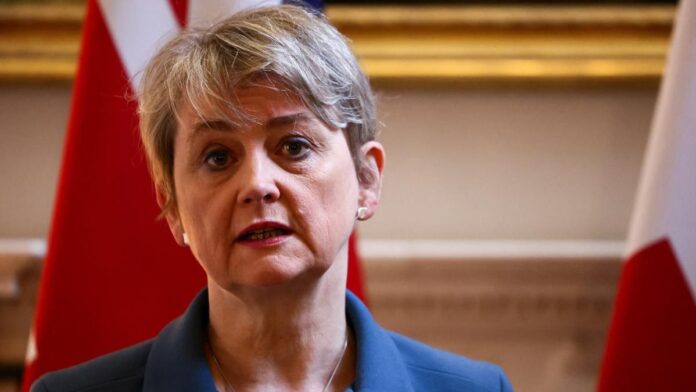
Yvette Cooper serves as the UK’s Foreign Secretary. A Labour MP since 1997, she has held roles such as Chief Secretary to the Treasury, Secretary of State for Work and Pensions, Shadow Foreign Secretary, and Shadow Home Secretary. Yvette Cooper assumed the position of Foreign Secretary on September 5, 2025, following her tenure as Home Secretary starting in July 2024. She was elected as the MP for Pontefract, Castleford, and Knottingley in July 2024.
Select Daily Mirror as a ‘Preferred Source’ on Google News for convenient access to

