
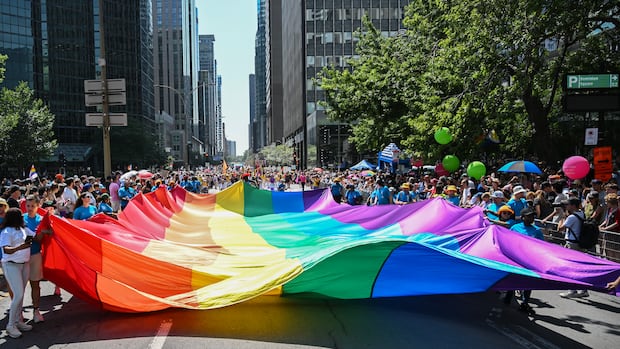
Amid pride month festivities in Quebec, political contenders from diverse sexual and gender backgrounds participating in the upcoming provincial election are raising concerns about a surge in hateful messages directed at them.
Québec solidaire has reported a significant uptick in online hate targeting its 2SLGBTQ+ candidates, describing the situation as “exceptional” and “alarming.”
Party president Roxane Milot, a candidate in Montreal, expressed worry over the escalating online violence aimed at marginalized candidates, highlighting the potential deterrent effect on individuals from diverse backgrounds considering a foray into politics.
Milot, who identifies as bisexual, emphasized the adverse impact of such targeted attacks, noting the reluctance of many marginalized groups, including queer, women, and racialized individuals, to engage in political activities. She underscored the worsening situation in Quebec, citing feedback from 2SLGBTQ+ organizations.
Recently, Milot herself became a target of hateful messages and online harassment. The party faced controversy when one of its candidates, Vanessa Durand, withdrew following derogatory remarks made towards Parti Québécois supporters from 2SLGBTQ+ communities. Durand apologized and retracted her candidacy after deleting the post.
Philippe Schnobb, a Parti Québécois candidate, disclosed his experience of receiving homophobic hate messages, including recent threats, since his entry into politics earlier this year. Schnobb, who identifies with the sexual and gender diverse community, highlighted the concerning nature of these comments and threats, indicating a shift in tone compared to his prior public roles.
Despite encountering intolerable remarks, Schnobb refrained from pursuing legal action at present, emphasizing the need to maintain composure amid heightened tensions as the election approaches.
In a separate development, Liberal Leader Charles Milliard, who is openly gay, addressed the issue of electoral readiness concerning a gay premier in Quebec, affirming his commitment to transparency about his identity. He condemned homophobic remarks directed at him on the International Day Against Homophobia and Transphobia.
Acknowledging the prevalence of homophobic and transphobic comments across political parties, Philip Laflamme, a senior adviser for the Liberal party, highlighted the pervasive nature of such attacks, even targeting candidates not directly associated with sexual and gender diversity.
The Coalition Avenir Québec Leader Christine Fréchette’s communications director expressed the party’s condemnation of attacks on candidates through social media, emphasizing the monitoring of candidates’ online accounts to prevent such incidents.
The team of Quebec Conservative Party Leader Éric Duhaime, who is openly gay, confirmed his receipt of hateful online comments but opted not to amplify them further.
Several political parties have adapted their strategies in response to the escalating online violence against candidates. Within Québec solidaire and the Liberal party, support mechanisms and training sessions have been implemented to assist candidates in navigating hostile situations effectively.

