
A recent discovery in northern Yukon challenged initial assumptions about bones found in the Bluefish Caves and a local mine site, initially believed to be from an ice-age puma or cougar. However, a DNA analysis conducted by the University of California revealed a surprising twist. Molly Cassatt-Johnstone, a lab technician who had just completed her undergraduate studies at the time, conducted the analysis on the Yukon bones, leading to a groundbreaking revelation.
The findings indicated that the bones did not belong to pumas as previously thought, but rather to cheetahs — specifically, a species known as Yukon Miracinonyx, which is an extinct American cheetah. This discovery, detailed in a research paper published in Current Biology, provided new insights into the dietary habits and habitat range of these ice-age cats.
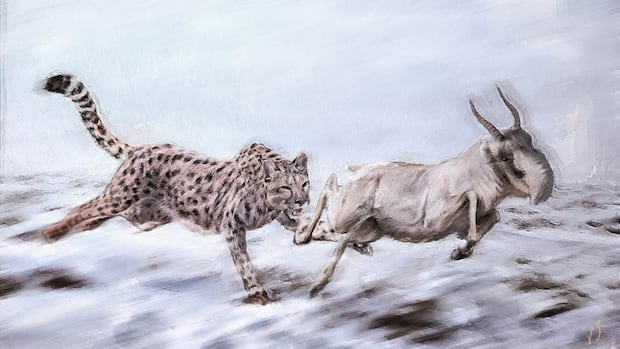
Traditionally, researchers believed that American cheetahs, resembling modern-day cheetahs with their long limbs and slender physique, would have hunted pronghorns on grassy plains. However, the unexpected presence of these creatures in the Arctic tundra puzzled paleontologists. The absence of pronghorn in Beringia, the land connecting Asia and North America, raised questions about how the Miracinonyx survived in that environment.
To unravel this mystery, a team of researchers from Canada and the U.S. conducted stable isotope analysis on bone samples from the Yukon cheetahs. This technique, commonly used in forensics, provided insights into the animals’ diet, climate conditions, and potential migration patterns. Surprisingly, the analysis revealed that the Yukon cheetahs primarily fed on fish, a behavior uncommon among past and present felines.
The study also involved extensive genetic analysis, which showed that Miracinonyx was more closely related to North American pumas than African cheetahs. Additionally, researchers noted a low genetic diversity within the cheetah population, suggesting limited adaptive potential that may have contributed to their extinction.
Julie Meachen, a paleontologist specializing in mammalian carnivores, highlighted the unique behavior of the Yukon cheetahs compared to their counterparts in other regions. In a landscape teeming with formidable predators like Beringian lions and giant short-faced bears, the cheetahs’ reliance on plentiful salmon runs offered them a competitive advantage.
Given the distinctive characteristics and habitat preferences of the Yukon cheetahs, paleontologist Grant Zazula proposed renaming them as ‘Yukon Cheetahs.’ Zazula emphasized that even minor bone discoveries in the Yukon have the potential to unveil significant new insights about the region’s prehistoric fauna.

