
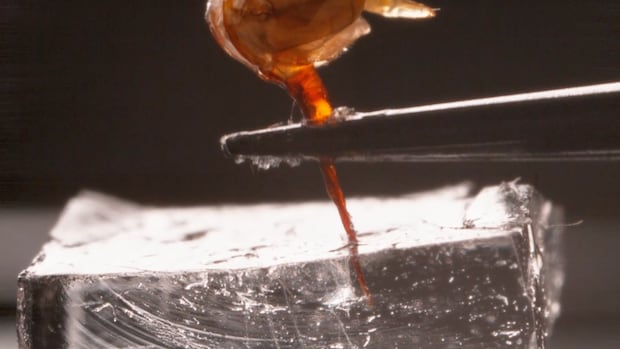
A western honey bee’s stinger is a final defense mechanism that injects venom into the target, often leading to the bee’s demise. Recent research, detailed in the Proceedings of the National Academy of Sciences, is shedding light on the effectiveness of this unique defense strategy. Fiorella Ramirez Esquivel, a postdoctoral researcher at Macquarie University in Australia, highlighted the significance of being able to capture the bees in action through modern high-speed cameras.
The study utilized high-speed cameras to capture bee stings happening rapidly. By exploiting the translucent nature of the venom sac and stinger, researchers could employ strong lighting to enhance the visibility of internal structures. Live honey bees were used in the experiments, with their stingers removed and the bees euthanized shortly after. Due to the short window of about two minutes where the stinger remains active post-separation from the bee’s body, swift actions were crucial.
The research revealed a double-piston design in the stinger where specialized valves work simultaneously to drive the stinger deeper while continuously pumping venom into the target. This intricate mechanism was compared to a car engine but with a more complex operation involving two pistons moving past each other in a synchronized manner. The study also explored how 3D printing was utilized to replicate the valve movements for a better understanding of the process.
The stinging behavior of honey bees was attributed to their social structure and the need to defend the colony. The act of leaving part of the stinger in the target, known as autotomy, is a strategy unique to the western honey bee. Female worker honey bees, unlike other bee species, have barbs on their stingers that aid in embedding the stinger, sacrificing themselves to protect the colony. Additionally, honey bee stingers release pheromones to signal other bees to join in the defense against threats.
While the research primarily focused on western honey bees, it raised questions about the stinging behavior in other honey-producing bee species. The findings offer insights into the complex and efficient venom delivery system of honey bees, with potential applications in various fields including medicine.

