
Parts of British Columbia have been experiencing severe drought conditions this summer, leading to water use restrictions in areas like Bessette Creek to safeguard salmon populations from dwindling water levels. Temporary protection orders were also enforced for the Salmon River watershed due to heightened wildfire risks in the region. These interventions reflect the challenges faced by various watersheds in the province.
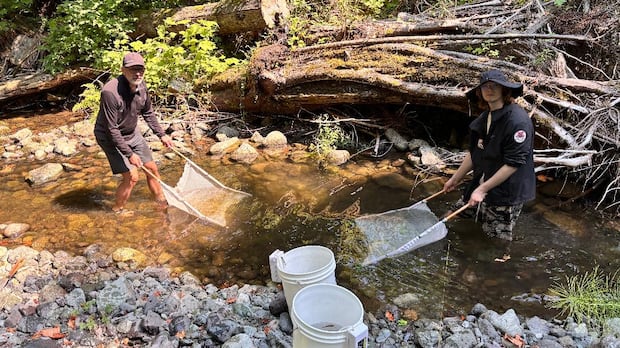
Bob Crandall, the treasurer of the Cowichan Lake Salmonid Enhancement Society, highlighted the worsening dryness of the 16 streams linked to Lake Cowichan. The society is actively engaged in fry salvage operations, where fish are rescued from drying rivers and relocated to other water bodies. Crandall emphasized the importance of human intervention to mitigate ecosystem challenges caused by human activities.
Despite the community’s support for these rescue efforts, experts caution that such measures have limitations and may not serve as a sustainable long-term solution. Collaborating with the Ts’uubaa-asatx Nation and volunteers, Crandall focuses on relocating various fish species to ensure their survival amid changing climate conditions. The ongoing impact of climate change is evident in the increasing difficulty of the fry salvage process, with streams drying up farther upstream than in previous years.
Efforts to relocate fish involve using aerators and nets for transportation, with challenges arising from the physical demands of moving fish across dry streambeds. The Ts’uubaa-asatx Nation plays a crucial role in these conservation endeavors, utilizing drones to monitor drying streams and actively participating in fish relocation activities. The community’s deep connection to salmon underscores the significance of their conservation efforts for future generations.
However, similar rescue initiatives are encountering obstacles worldwide due to worsening drought and extreme heat events. In France, where severe drought conditions have prevailed, fish relocation strategies have proven ineffective. The unprecedented frequency of extreme weather events underscores the inadequacy of past management approaches in addressing current environmental challenges.
Jean-Pierre Faure of the Fédération de Pêche du Rhône in France highlighted the detrimental impact of climate change on river ecosystems, leading to fish mortality and habitat degradation. He emphasized the need for prioritizing ecosystem restoration and sustainable water management practices over short-term fish rescue operations. Faure stressed that coping with extensive river drying at a large scale is not feasible and emphasized the importance of holistic approaches to address the root causes of environmental degradation.

