
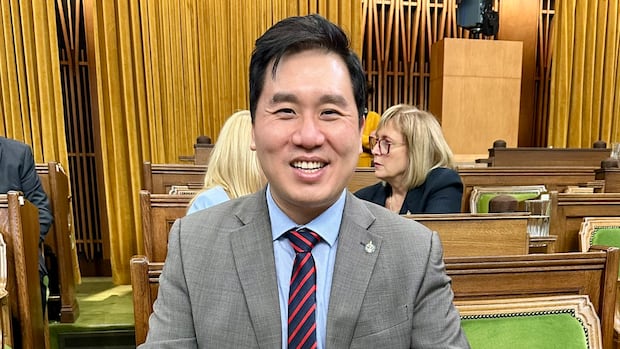
After announcing his resignation from the House of Commons, Liberal MP Shaun Chen faced online accusations of violating House rules by participating in voting while in China earlier this year. These claims were circulated by various right-wing influencers and several current and former Conservative MPs, citing videos on WeChat showing Chen in China on the same day he allegedly voted in the House of Commons.
The allegations suggested that Chen cast electronic votes on March 25 while physically present in China, potentially breaching national security protocols. References to House of Commons standing orders were made, highlighting the prohibition against MPs voting while outside of Canada. Specifically, it was claimed that Chen participated in voting on Bill C-9, the government’s contentious hate crime legislation, while overseas.
Despite suggestions that the WeChat videos could have been manipulated or posted after the trip, concerns were raised regarding the validity of Chen’s voting location. However, according to House rules, MPs are strictly forbidden from voting while abroad, and electronic votes must be cast within Canada as per standing order 45 (12) (a). Additionally, MPs’ identities are visually confirmed through facial recognition technology when casting votes to ensure compliance with the rules.
In response to the allegations, a spokesperson for House Speaker Francis Scarpaleggia emphasized the existence of stringent technical controls and human validation processes to verify MPs’ physical presence within Canada during voting sessions. Chen’s office clarified that he was in China from March 14 to March 22, returning to Canada just in time for the House of Commons sitting on March 23 following the spring recess.
Documentation provided by Chen’s office, including his boarding pass and visa stamps, supported his claim of returning to Canada before voting in the House. Chen’s office further explained that his resignation was primarily due to health issues that restricted his ability to travel frequently to Ottawa, revealing that his trip to China was an official parliamentary visit with the Canada-China Legislative Association on parliamentary business.
Critics, including independent journalist Andy Lee, questioned Chen’s ability to travel to China while citing health concerns that prevented him from regular travel to Ottawa. The trip to China was organized by the Hakka Canadian Association, chaired by Markham Coun. Joe Li, focusing on fostering relationships among the Hakka ethnic group in Canada.
Correspondence between Chen and House of Commons IT staff regarding cybersecurity measures during his trip was also disclosed by his office, indicating awareness of potential cybersecurity risks. The Office of Canada’s Conflict of Interest and Ethics Commissioner publicly disclosed details of Chen’s trip, which included a sponsored visit from March 14 to 22 with accommodations provided for seven nights.

