
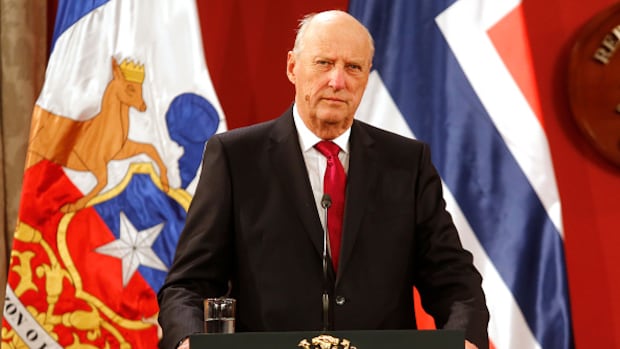
Norway’s King Harald, known for his reformist approach and distinguishing himself from his outgoing father during his over three-decade reign, passed away at 89, as confirmed by the royal palace. The monarch, Europe’s eldest, succumbed to a bacterial infection in his blood, after being admitted to Oslo University Hospital on August 17. This incident follows his prior hospitalization in 2024 while in Malaysia, where he received a temporary pacemaker before being transferred back to Norway by the military for a permanent device installation.
In the same year, King Harald, who had been Norway’s ceremonial head of state since 1991, announced a reduction in his official engagements but dismissed abdication, emphasizing his lifetime commitment to the throne. Prime Minister Mark Carney expressed his condolences, noting King Harald’s strong ties with Canada, including visits to Toronto and the Norwegian soldiers’ training base in Little Norway during his wartime exile. Carney also recalled a state visit in 2002 that included stops in Ontario, Newfoundland, and Labrador, as well as Nova Scotia.
Amidst tribulations in the royal family, Crown Princess Mette-Marit, married to King Harald’s son Crown Prince Haakon, faced scrutiny for her association with the late sex offender Jeffrey Epstein. Additionally, her son Marius Hoiby, from a pre-marital relationship, was recently convicted of rape and domestic violence, receiving a four-year prison sentence. Following Marius’s conviction, Mette-Marit underwent a lung transplant, later celebrating her silver wedding anniversary with Crown Prince Haakon after a hospital recovery period.
Despite a decline in public support for the monarchy in early 2026, King Harald maintained popularity among Norwegians, being widely regarded as the royal family’s representative. As a descendant of Queen Victoria, King Harald ascended the throne in 1991, modernizing the ceremonial role and providing comfort to the nation during times of grief. His legacy included advocating for tolerance and embracing diversity, exemplified by his support for openness and inclusivity in European royal families.

