
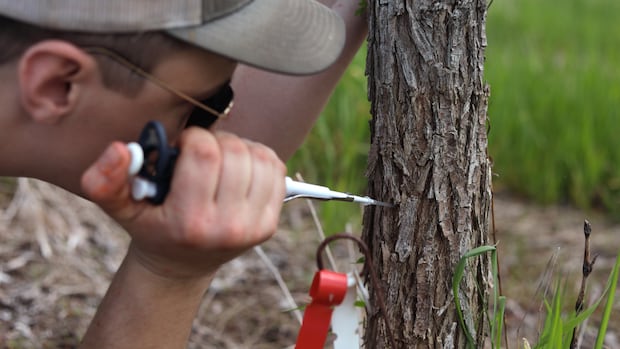
Scientists in Vermont have been intentionally infecting thousands of trees with Dutch elm disease as part of an experiment to breed a new generation of disease-resistant elms. The disease, spread by bark beetles, has been devastating elm populations in the U.S. and Canada for many years. The aim is to eventually restore areas once abundant with elms, such as city streets and riverbanks.
Gus Goodwin, a senior conservation planner at The Nature Conservancy, expressed the devastating impact of losing elm trees over the years. Researchers in Canada are also working on similar projects to combat Dutch elm disease as it emerges in new regions.
In the past, infected elms were immediately removed to control the disease, but healthy trees were often removed as well, unintentionally reducing the population of disease-tolerant elms. Efforts are now focused on breeding and cloning trees that have shown resilience to Dutch elm disease.
Cities like Edmonton and Saskatoon have recently faced increasing cases of Dutch elm disease, threatening their urban forests. Local authorities are taking proactive measures to remove infected trees and prevent further spread of the disease.
While the battle against Dutch elm disease continues, experts emphasize the importance of preserving mature trees for their environmental benefits, such as providing shade and helping manage stormwater. Restoring elm populations could contribute to building resilient ecosystems in the face of climate change challenges.
Ongoing research and breeding programs aim to develop disease-resistant elms that can coexist with Dutch elm disease, similar to elms in Europe. Although natural evolution could potentially lead to disease tolerance over time, expedited efforts are being made to accelerate this process and ensure the survival of elm trees for future generations.

